How to Customize the DUEL Monster Shot
minagiman
Minagiman's Fishing Adventures in Japan
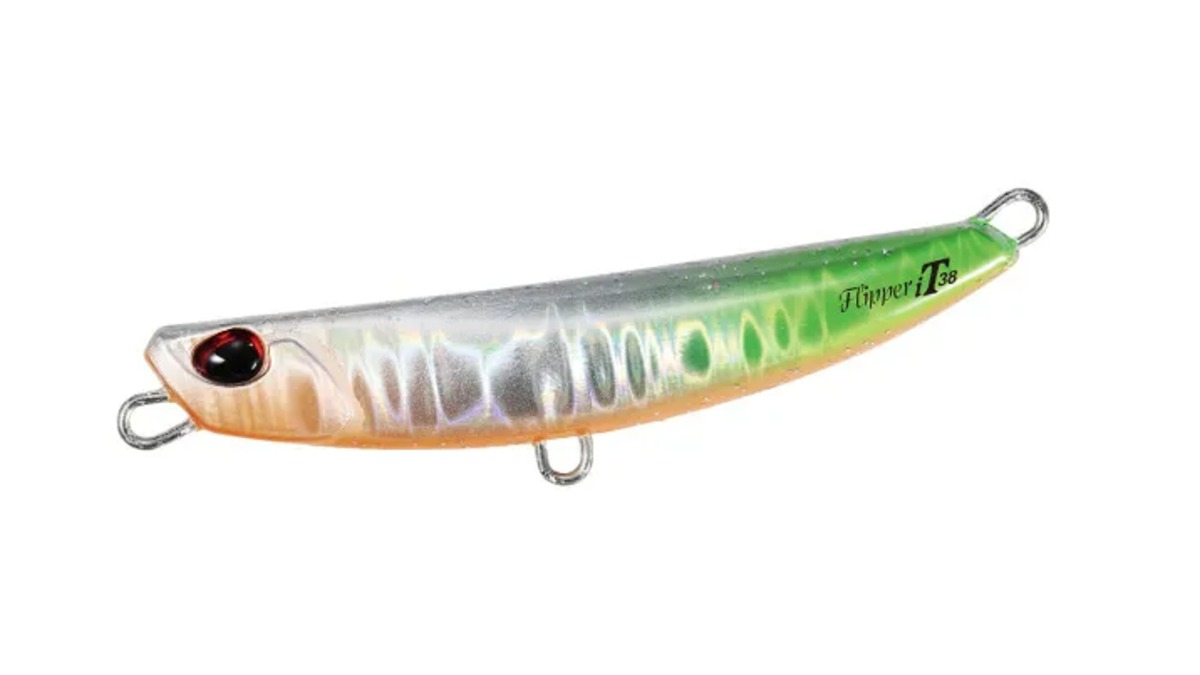
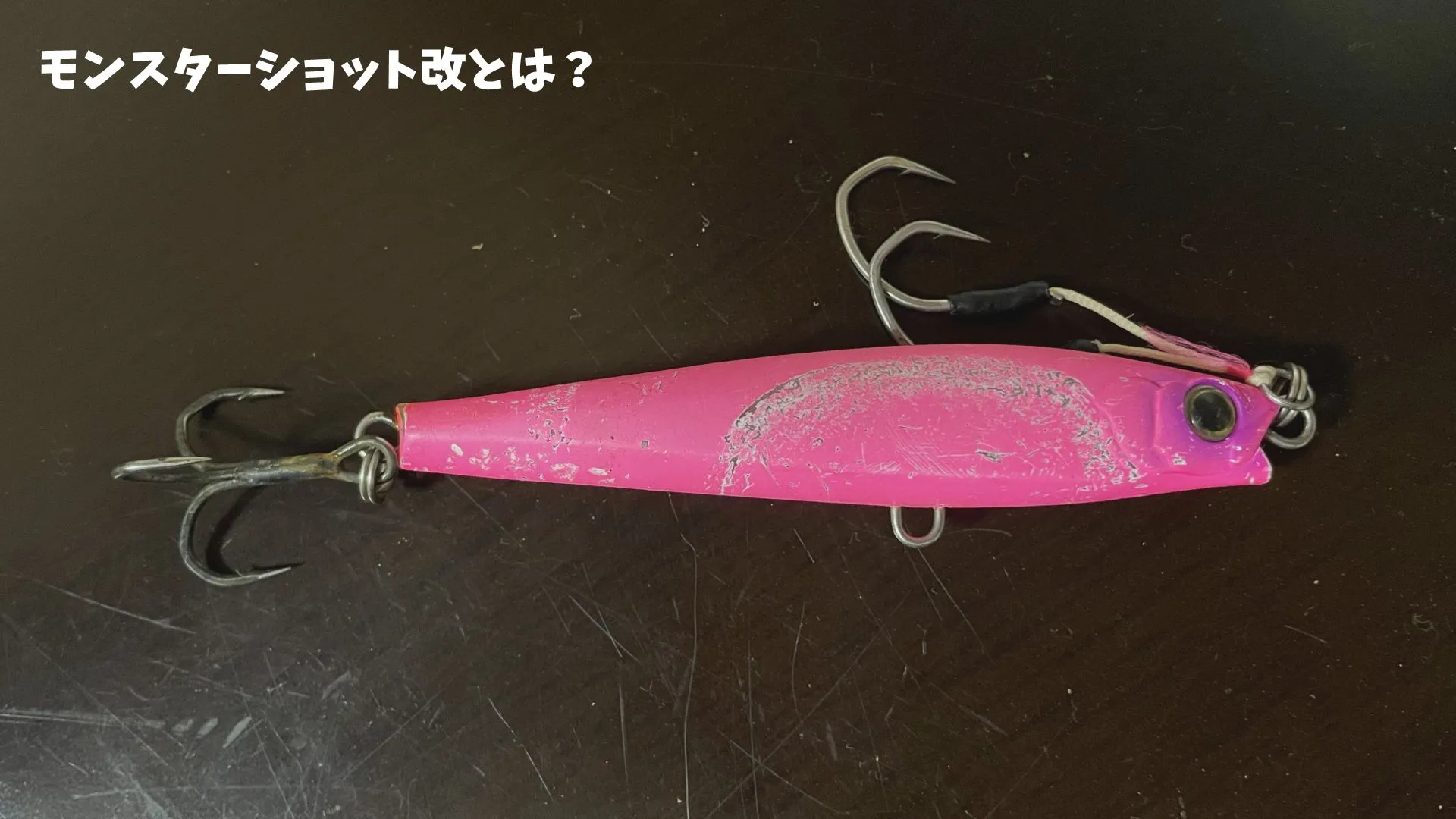
Note before you read: this lure is a September 2026 release and I have not had one in my hand yet. Everything below is read off the published specification and off using the other Flippers, not from fishing this one. I will add a proper impression once I have used it. The photo at the top of this page is the Flipper iT38, the closest sibling to the iTMB33 – it will be swapped for the real thing when I have one.
DUO’s Beach Walker Flipper is one of the few Japanese surf lures that has genuinely crossed over – if you fish sand anywhere, someone near you owns one. The new Flipper iTMB33 is interesting because the name tells you exactly what DUO did, if you know how to read it.
DUO has two existing modifiers in the Flipper range. iT means tungsten is built in. MB means a rear blade. The iTMB33 is both of them in one body at 33 g: a tungsten-weighted, blade-equipped Flipper. That is the whole design brief in four characters.
| Beach Walker Flipper iTMB33 | |
|---|---|
| Length | 59 mm |
| Weight | 33 g |
| Price | 2,310 yen (incl. tax) |
| Hooks | Front #7, rear blade #6 |
| Split rings | #2.5 |
| Colours | 12, with gold or silver blades matched to the body colour |
| Material | Lead plus tungsten |
| Release | September 2026 |
| Designer | Supervised by Mitsuya Hotta |
| Targets | Flatfish, large pelagics, ōnibe (Japanese meagre) |
| Model | Length | Weight | Price (yen) | Hooks |
|---|---|---|---|---|
| Flipper iTMB33 | 59 mm | 33 g | 2,310 incl. tax | #7 front, #6 rear blade |
| Flipper 32 | 70 mm | 32 g | – | – |
| Flipper iT38 | 68 mm | 38 g | 2,090 | #7 front, #6 rear |
| Flipper MB22 | 49 mm | 22 g | 1,650 | #8 front, #8 rear blade |
Two numbers stand out. The iTMB33 is about 11 mm shorter than the Flipper 32 at almost the same weight – that is the tungsten doing its job, packing the same mass into a smaller silhouette. And the blade is roughly 2.5 times the size of the blade on the MB22, so this is not simply a bigger MB22; the appeal has been scaled up more than the body has.
| Situation | Which Flipper |
|---|---|
| Standard surf, general searching | Flipper 32 |
| Maximum distance, deep or fast water | Flipper iT38 |
| Small bait, light conditions, shorter casts | Flipper MB22 |
| Windy days with small bait, or when you want flash at a slow speed | Flipper iTMB33 |
If you already own the 32 and the MB22, the iTMB33 is not filling a gap in weight – it is filling a gap in appeal at a given weight. That is a narrower reason to buy, but on the days it matches, it matters.
Autumn 2026 has a pattern to it. DUO has gone heavier-bodied and blade-forward with this Flipper; Shimano’s new Hikage 125S has a body around 1.6 times the wall thickness of the Silent Assassin series. Japanese makers appear to be attacking the assumption that plugs are the fragile option in a surf box. If you fish where big pelagics and structure both exist, that is a good trend.
I will update this page once the lure has been through a few sessions.