Best Japanese Surf Rods by Price: 14 Picks from Daiwa, Shimano and Major Craft
minagiman
Minagiman's Fishing Adventures in Japan
Choosing a surf rod is harder than choosing a reel, because the rod decides what the whole setup can do. You want distance, you want to throw minnows and soft plastics and metal jigs off the same blank, and you want to still be casting comfortably four hours in. Shimano’s Nessa line is the range built around exactly that problem, and the 2026 XR is the middle of it.
Five models, all three-piece, and the differences between them matter more than the marketing does. Here is how to pick one.
The butt guide is the Touch Free Titanium X-Guide, borrowed from further up Shimano’s range. It gathers line coming off the spool more smoothly, which cuts tangles at the tip, fraying on the braid, and wind knots.
That sounds like a minor spec line until you have fished a beach in a crosswind. In surf fishing you are casting continuously, often into wind, and every tangle is time not fishing. Fewer line problems is the single thing that most improves a long session.
The carbon monocoque grip is hollow for weight, and Shimano changed the shape from round to edged. The practical effect is that you can grip it properly when you are fully loading the rod with a heavy metal jig, instead of feeling it roll in your hand.
The Perfection Seat XT reel seat has the steps between components smoothed out. It sits in the palm comfortably through casting, working the lure and fighting a fish.
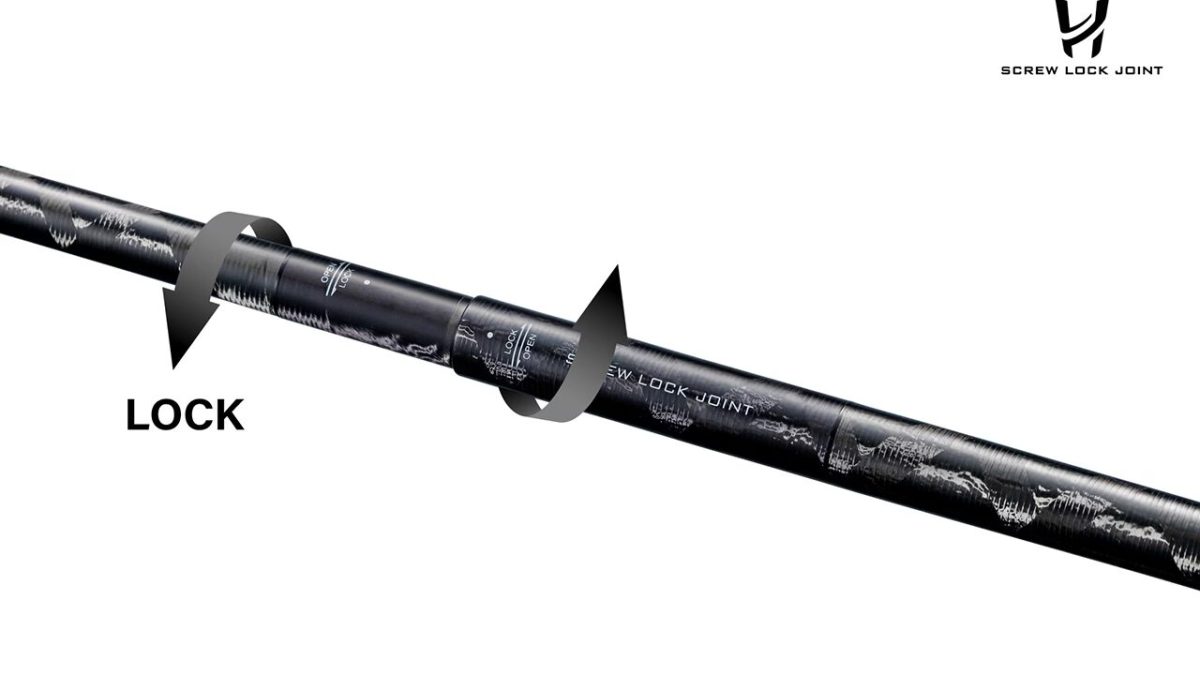
All five models are three-piece, with ferrules that screw and lock rather than simply push together. Anyone who has fished a multi-piece rod hard knows the feeling of checking the joints every twenty casts. This removes that. The S1010M/MH and S110M/MH+ also get a softer tip section.
| Model | Length | Lure rating | Line | Best at | Buy this if |
|---|---|---|---|---|---|
| S99M+ | 9’9″ (2.97 m) | Jigs to 50 g / plugs 12-45 g | PE 0.8-2 | Close range, light lures, precise control | You value working the lure over raw distance |
| S1010M+ | 10’10” (3.3 m) | Jigs to 50 g / plugs 12-45 g | PE 0.8-2 | Flounder, flathead and small to mid pelagics | It is your first surf rod and you cannot decide |
| S1010M/MH | 10’10” (3.3 m) | Jigs to 58 g / plugs 12-54 g | PE 0.8-2 | Drifting sinking pencils, loading into the fish | You fish current rather than casting at random |
| S110MH/JERK | 11’0″ (3.35 m) | Jigs to 58 g / plugs 12-58 g | PE 0.8-2 | Minnows and jerkbaits, working structure out wide | You move the lure with the rod, hard |
| S110M/MH+ | 11’0″ (3.35 m) | Jigs to 68 g / plugs 12-58 g | PE 1-2.5 | Distance, heavy lures, rough conditions | Distance and power come first |
A 4000-class reel suits the M and M+ models; step to 5000 if you go with the S110M/MH+ and fish metal jigs at the top of its rating. For line, the ratings above are in the Japanese gō system – PE 1.0 to 1.5 covers most flounder work, PE 1.5 to 2.0 if pelagics are in the plan. Remember that gō is a thickness unit, not a strength unit.
The Nessa range runs from the BB at the entry point up through SS, XR, and further to the Exsence-grade models. The XR is the point where you get the blank reinforcement and the guide train from the higher grades without paying flagship money. If you are buying one Japanese surf rod and intend to keep it, this is the sensible place in the range to land.