Shimano 26 Nessa XR: All Five Models Compared, and Which Surf Rod to Buy
minagiman
Minagiman's Fishing Adventures in Japan
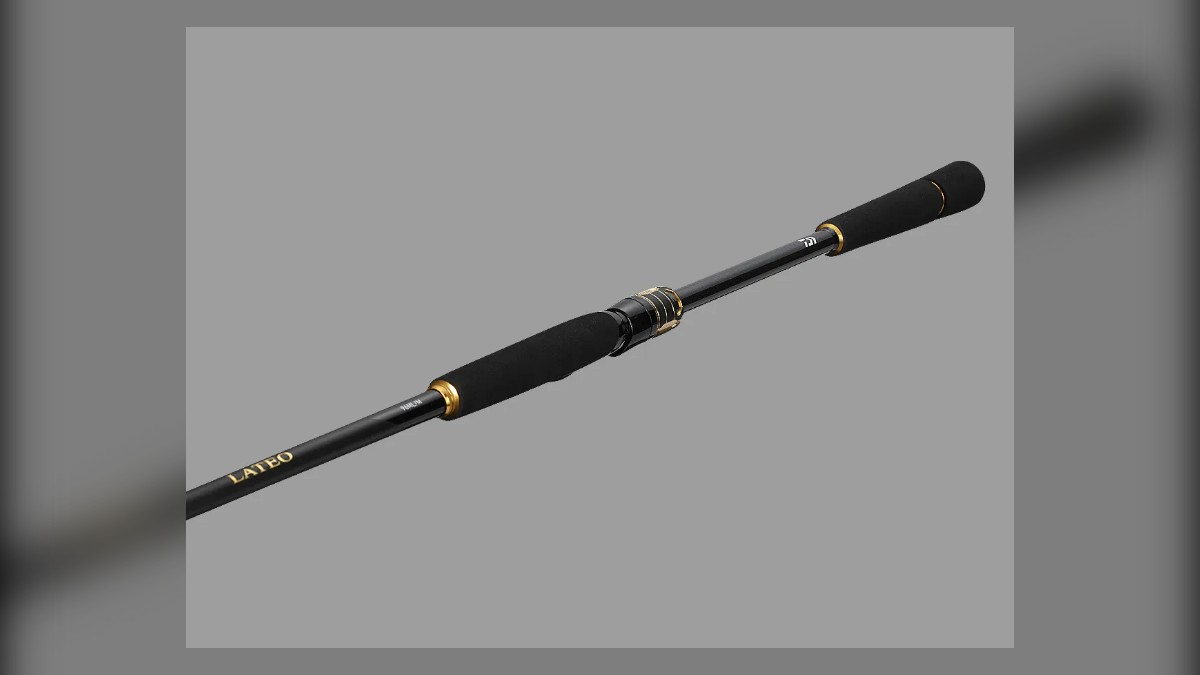
Daiwa’s Lateo is the rod a lot of Japanese anglers buy as their first “proper” seabass and surf rod, and plenty of them never feel the need to replace it. The 2024 model is the best version yet. I have been using the 24 Lateo 96ML/M as an all-round shore rod – surf flatfish, light shore jigging, soft plastics – and this is how it has held up.
The finish is the first surprise. A matt, understated logo and a black-and-gold reel seat make it look closer to Daiwa’s premium Morethan Branzino than to a mid-price rod. That is not why you buy a rod, but it is nice to pick up.
The reel seat is Daiwa’s Air Sensor seat – light, and it sits well in the hand. For long sessions of repeated casting, that matters more than it sounds.
The first thing I noticed was distance. With the metal jigs I use most – around 30 g – it throws a long way, and it stays controllable when the surf is up. Most of my use is for flounder and flathead on sand, and this is exactly the kind of fishing it suits.
Just as important, the blank is stable on the cast. My old 19 Lateo had a little wobble at full power; the 24 model has far less, and that shows up as accuracy. On a beach, putting the lure exactly on a rip edge or a gutter is half the job.
The rear grip has changed from round to a shape with flattened sides, which Daiwa calls the CC grip. Two things improved for me:
The blank recovers quickly after the cast, so it settles straight away and you are ready to fish. That crispness also helps when working jigs: on super-light shore jigging, the rod responds instantly to each jerk, and it handles one-pitch jerking and light plugs well.
What makes it a good first rod is how wide its range is. I use it for surf finesse fishing, rockfish and light shore jigging, and it covers all of them. With a jig-head soft plastic of around 10 g, the tip loads properly and you can feel what the lure is doing – something I was less confident about with the 19 model.
| 19 Lateo | 24 Lateo | |
|---|---|---|
| Stability on the cast | Some wobble at full power | Much more stable, more accurate |
| Recovery after the cast | Good | Noticeably faster and crisper |
| Light lures (around 10 g) | Workable, less feel | Tip loads well, clear feedback |
| Rear grip | Round | Flattened CC grip |
If you already own a 19 Lateo and you are happy, there is no emergency. But the 24 model is a clear step up in casting stability and feel.
I run it with a Daiwa 24 Certate LT4000 and PE 1.5. The balance is excellent, and casting a 40 g jig on that combination is comfortable all day. (My notes on the reel are in the 24 Certate review.)
The full 2024 range runs to 21 models, including baitcasting versions. These are the ones most relevant to beach and shore fishing. Prices are Daiwa’s list prices excluding tax.
| Model | Length | Weight | Lure (g) | PE | Price (yen) |
|---|---|---|---|---|---|
| 96ML/M | 2.90 m | 141 g | 7-50 | 0.8-2.0 | 31,500 |
| 96M | 2.90 m | 147 g | 10-50 | 0.8-2.0 | 31,500 |
| 96MH | 2.90 m | 163 g | 12-60 | 1.0-2.5 | 33,000 |
| 100M | 3.05 m | 152 g | 10-50 | 0.8-2.0 | 34,000 |
| 100MH | 3.05 m | 155 g | 12-60 | 1.0-2.5 | 35,000 |
| 106M | 3.20 m | 155 g | 10-50 | 0.8-2.0 | 35,000 |
| 110M | 3.35 m | 175 g | 10-50 | 0.8-2.0 | 36,000 |
| 110MH | 3.35 m | 188 g | 12-60 | 1.0-2.5 | 37,000 |
There is also a four-piece series (90ML-4, 96M-4, 106M-4, 110MH-4 and two baitcasting models) that packs down to 70-89 cm – worth knowing if you are travelling to Japan by train or plane and want to bring a rod.
The 24 Lateo is easy to recommend to a beginner and still satisfying for an experienced angler. Light, stable on the cast, crisp, and priced well below the rods it looks like. It has become my main surf rod, and I expect it to stay that way for a long time.
If you are weighing it against other Japanese surf rods, my surf rods by price range guide puts it in context.