Ribbonfish (Tachiuo): The Japanese Autumn Fish That Signals Yellowtail
minagiman
Minagiman's Fishing Adventures in Japan
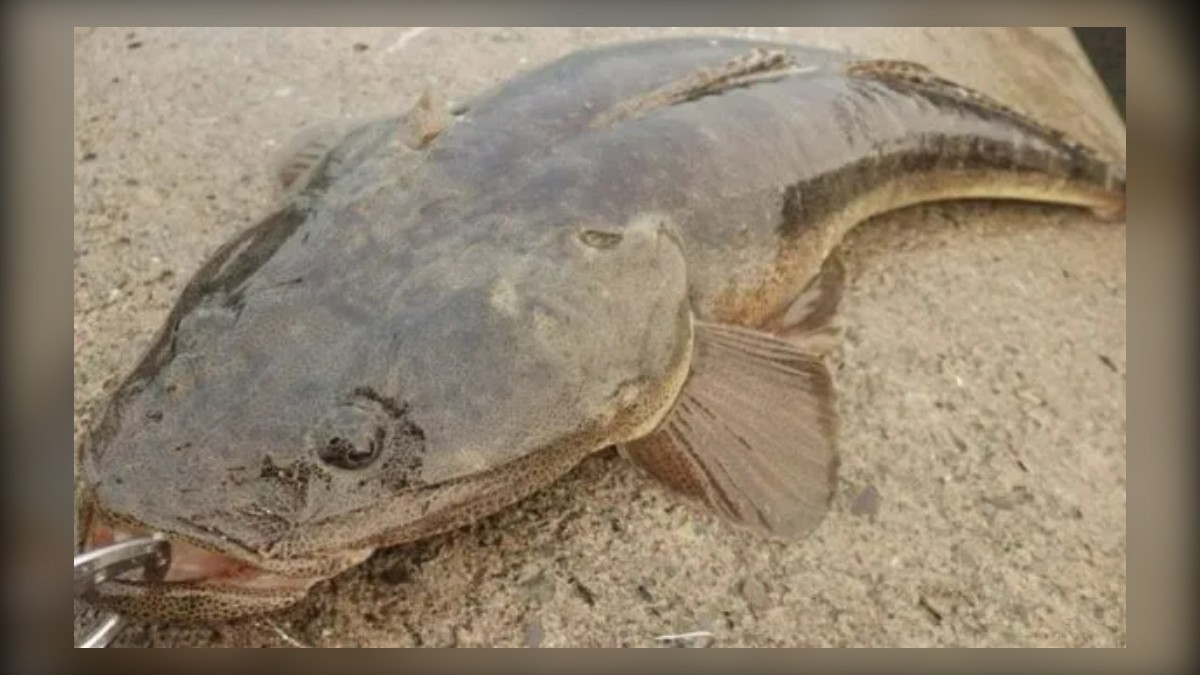
Fish for flounder on a Japanese surf beach and sometimes you hook something heavy that does not run. Up comes a flat head and a big mouth: magochi, the bartail flathead (Platycephalus sp.). Some anglers are disappointed it is not a flounder — they should not be. Magochi is a prized summer fish that rivals flounder on the table, and you can target it.
| Item | Detail |
|---|---|
| Japanese name | Magochi |
| Other names | Kochi; “teri-gochi” in summer |
| Max size | Can exceed 60 cm |
| Good size | 50 cm+ |
| Range | Mainly central Honshu southward, sandy-mud coasts |
| Habitat | Surf, river mouths, sandy-mud bays |
| Spawning | Spring to early summer |
| Best eating | Summer |
Most prized white-fleshed fish are best in winter, but magochi peaks in midsummer — hence “teri-gochi” (“blazing-sun flathead”). Summer is when it recovers after spawning and puts on fat. That makes it the perfect partner to flounder: the same beaches, but in the season flounder fishing slows.
| Season | Flounder | Flathead |
|---|---|---|
| Spring | Good | Fair (spawning) |
| Summer | Fair (warm water) | Excellent |
| Autumn | Excellent | Good |
| Winter | Good (best eating) | Poor (moves deep) |
Magochi are protandrous: they start as males and change to females as they grow, mostly around 40 cm. So a 50 cm+ flathead is almost certainly female — a spawning fish, which is a good reason not to keep too many big ones.
| Flounder (hirame) | Flathead (magochi) | |
|---|---|---|
| Body | Lies on its side | Lies on its belly, head flattened from above |
| Eyes | Both on the left side | Both on top of the head |
| Attack | Rises from below | Strikes almost straight up over a short distance |
| Swimming | Swims fairly well | Rarely swims far |
Flounder will hit lures tens of centimetres off the bottom; flathead need them much closer. Most anglers who cannot catch flathead are running their lures too high.
Re-finding the bottom is almost everything. Soft plastics on jigheads, drop-shot or Texas rigs help; metal jigs work too if you keep them near the bottom.
In a word: heavy. It does not run or pull much, it just feels like dragging rubbish — until it shakes its head hard in the shorebreak. “I thought I was snagged, then it moved” is classic flathead. Their mouths are hard, so make sure the weight is fully on before you set the hook.
This is the most important part. Magochi have sharp, hard spines around the gill covers that can go deep into your hand — and they suddenly jump when you hold them.
| Item | Guide |
|---|---|
| Rod | 9’6”–10’6” ML |
| Reel | 4000 |
| PE | 1.0–1.2 |
| Leader | Fluoro 20–30 lb |
| Lures | Soft plastics (20–30 g), metal jigs (30–40 g) |
Your flounder surf tackle works as is.
Magochi sashimi is superb — translucent white flesh sometimes compared with fugu, classic as thin slices with ponzu. Tempura, arai and shabu-shabu are great too. The head is big and bones are thick, so a 50 cm fish gives less meat than you expect. Bleed it by cutting at the gill base, chill without letting fresh water touch the flesh, and rest it about a day for more flavour.