Japanese Seabass in Autumn: Mullet, Sweetfish and Gizzard Shad, Month by Month
minagiman
Minagiman's Fishing Adventures in Japan
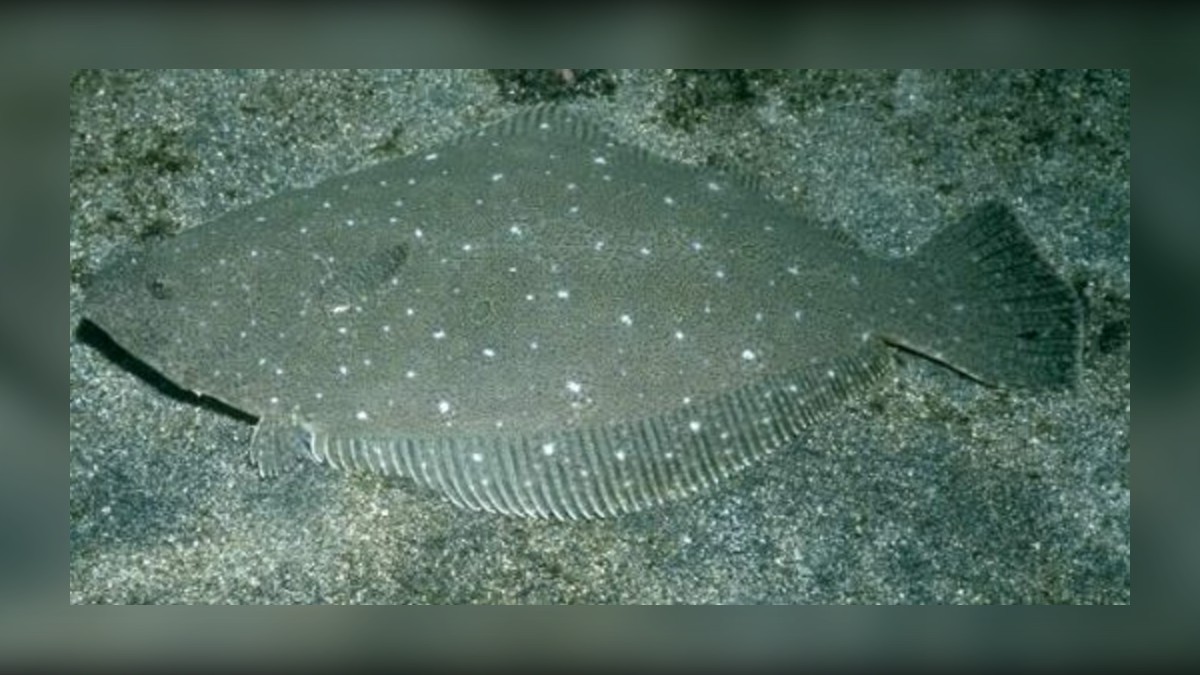
If you fish a beach in Japan, sooner or later you will be fishing for hirame. An entire section of every Japanese tackle shop exists to catch this one fish from the sand, and a whole style of fishing – surf lure fishing – grew up around it. Most of my own fishing life on the Enshunada coast has been spent chasing it.
This is the fish explained for someone who did not grow up with it: what it is, how to recognise it, when and where it feeds, and what to expect when you hook one.
| Item | Detail |
|---|---|
| Japanese name | Hirame (ヒラメ) |
| English names | Olive flounder, Japanese flounder, bastard halibut |
| Scientific name | Paralichthys olivaceus |
| Typical beach size | 40-60 cm |
| Small | Called soge |
| Large | Called zabuton (“floor cushion”) |
| Maximum | Fish over 80 cm are on record |
| Diet | Fish – sardine, anchovy and other small baitfish |
It is a predator. It lies flat on the sand, buried or half-buried, and strikes upward at baitfish passing over it. Almost everything about how you fish for it follows from that one fact.
Japan has a second group of flatfish called karei – the right-eye flounders. The Japanese saying is hidari hirame ni migi karei: “hirame on the left, karei on the right”.
Lay the fish dark side up with its belly towards you. If the head points left, it is a hirame. If it points right, it is a karei.
The mouth is the confirmation. A hirame has a big mouth full of sharp teeth – it is built to eat fish. A karei has a small mouth and eats worms and shellfish, which is why karei are caught on bait and hirame on lures.
| Season | What to expect |
|---|---|
| Autumn to early winter | The main season on most Pacific beaches. Bait moves inshore and hirame follow it |
| Spring | A second window, often with good-sized fish |
| Summer | Possible, especially at dawn and in stained water, but less consistent |
| Mid-winter | Hardest – but winter hirame (kan-birame) are considered the best eating |
Seasons shift by region and year. The simplest indicator is the bait: when small baitfish are pushed up against the beach, hirame are usually close.
A beach looks uniform. It is not. Hirame sit where the bottom changes and where current concentrates bait:
Reading those features is a skill of its own; I have a separate guide on how to read a surf beach.
The basic method is simple: cast, let the lure hit the bottom, then retrieve it steadily just above the sand. The fish is looking up. A lure dragged through the sand is below its line of sight and looks wrong; a lure that holds just above the bottom is exactly where it wants to eat.
There is an old saying, hirame yonjū – “hirame, forty”. Bait anglers using live sardines count to forty before setting the hook, because a hirame grabs the bait crosswise and takes time to turn it and swallow it. That is for live bait. On a lure, set the hook the moment you feel it.
A hirame bite on a lure is often a dull weight rather than a sharp knock – as if you have hooked a bag of sand. Then the head shakes start.
Hirame is one of the most prized white fish in Japan. Sashimi is the classic; the thin strip of muscle along the base of the fins, engawa, is the part sushi lovers look for. Bleed it quickly and keep it cold – the difference in quality is obvious.
A surf rod of about 10 ft in the ML to M range, a 4000-size spinning reel, PE 1.0-1.2 braid with a 16-20 lb fluorocarbon leader, and lures of 20-40 g. If the rod is the open question, start with my surf rods by price range and Nessa XR comparison. For line, see the PE line and leader guide.