Spanish Mackerel (Sawara, Sagoshi) From the Beach: Lures and How to Stop the Bite-Offs
minagiman
Minagiman's Fishing Adventures in Japan
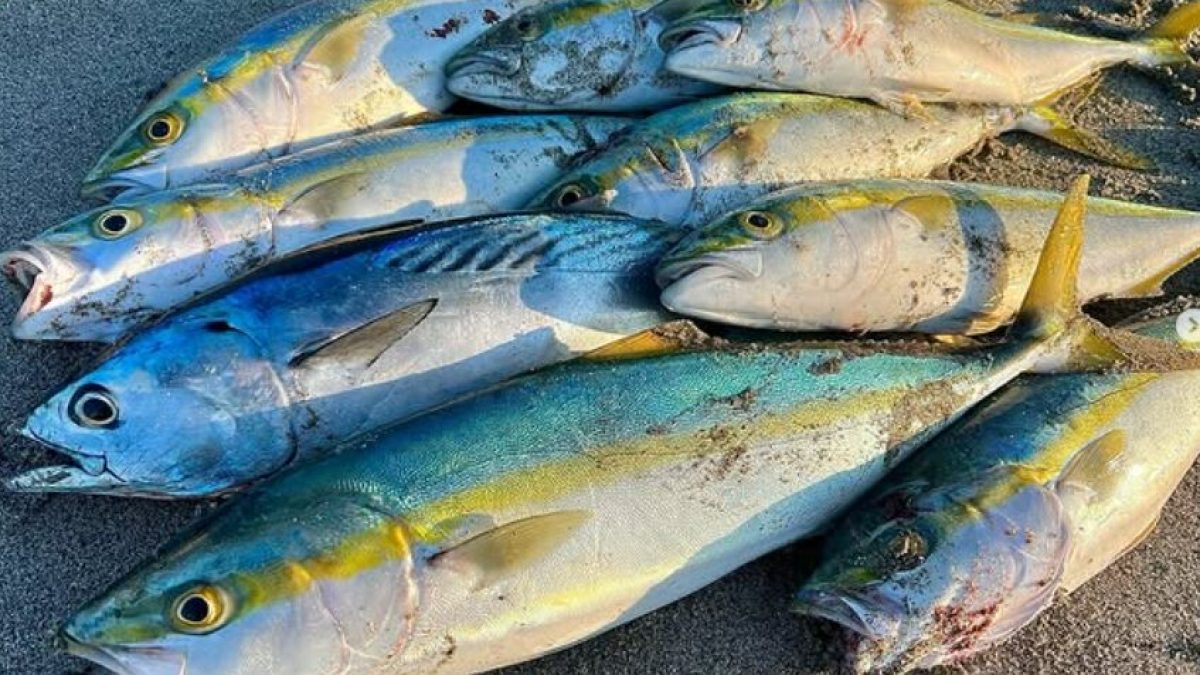
Ask a Japanese angler what they caught and you may get four different names for the same fish. Wakashi, inada, warasa, buri – it is all Japanese yellowtail, Seriola quinqueradiata, at different sizes. The fish gets a new name as it grows, like a promotion, and Japanese calls these shusse-uo – “career fish”.
That is the easy part. The hard part is timing. On a beach, yellowtail are there for a few weeks and then gone, and most of the advice you will find is a list of spots rather than dates. I fished the Enshunada coast – the long run of sand between Irago in Aichi and Iwata in Shizuoka – for years, and I kept a record. This is what the dates actually say.
| Rough size | Kanto (Tokyo side) | Kansai (Osaka side) |
|---|---|---|
| Up to ~35 cm | Wakashi | Tsubasu |
| ~35-60 cm | Inada | Hamachi |
| ~60-80 cm | Warasa | Mejiro |
| 80 cm and up | Buri | Buri |
The size boundaries are loose and people argue about them. Enshunada sits between the two regions, so you hear both – summer fish get called wakashi and tsubasu in the same car park. The one name everyone agrees on is buri for the big ones. If someone on a Japanese beach says “buri”, they mean a serious fish.
My catch reports for Tahara alone span nine different dates, and they read like nine different beaches – barracuda one week, ribbonfish another, yellowtail another. The spot did not change. The date did. On a beach there is no structure holding fish in place; they arrive with the bait and leave with it. So the useful question is not where, it is when, and what tells you that the window has opened.
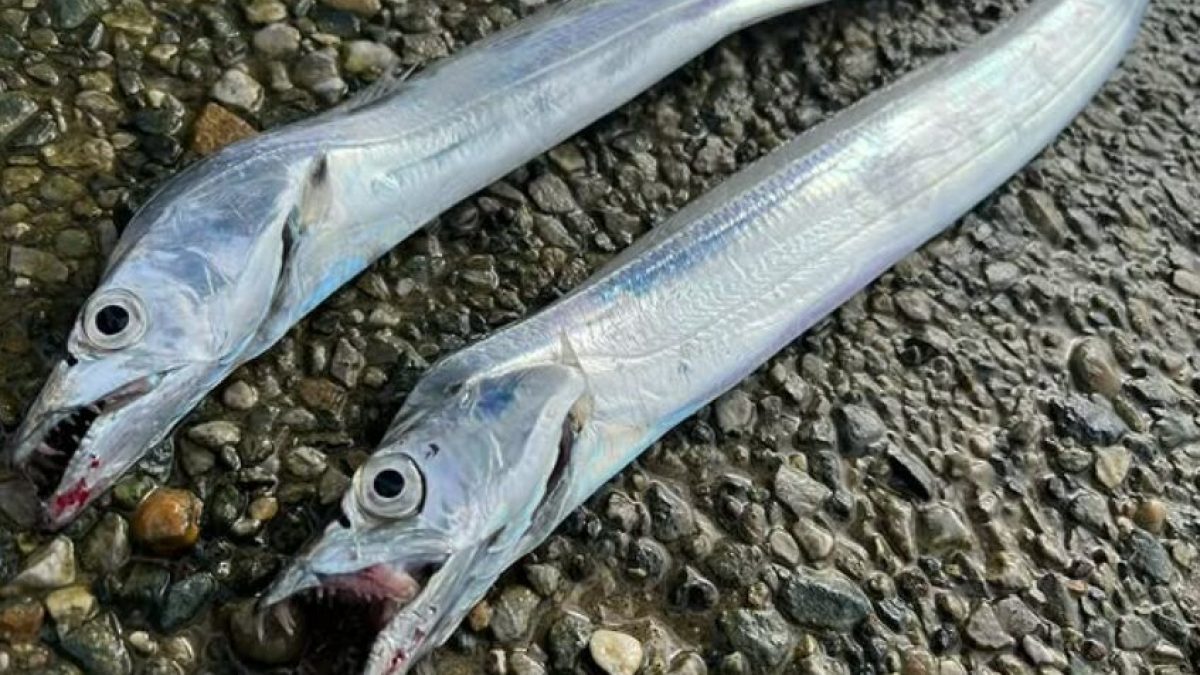
This is the single most useful thing in my notes. Once ribbonfish (tachiuo) are caught consistently on Enshunada, yellowtail follow within one to two weeks.
| Date (2024) | What happened |
|---|---|
| 10 September | Barracuda (kamasu) arrive in huge numbers – still too early for yellowtail |
| 6 October | First ribbonfish at Tahara |
| 14 October | Ribbonfish across the whole of Enshunada |
| 19 October | Yellowtail season properly starts |
Barracuda turning up in September looks exciting and is the wrong signal – it means the season is coming, not that it is here. Ribbonfish are the one to watch. In 2024 the gap from the first ribbonfish to the yellowtail was about two weeks; when they start showing reliably along the beach, expect the window to open within one to two.
| Period | What the beach does |
|---|---|
| Mid to late October | First yellowtail, mostly smaller fish |
| 6 November | Small fish only |
| 8 November | Buri and warasa start showing at Irago |
| Late November to 1 December | The peak – fish spread widely along the coast |
| Early to mid December | Tough fishing, but still buri and warasa |
| February | Can still be active, depending on bait |
Within that season, the two ends of the coast behave differently, and it is consistent enough to plan around:
If you want one big fish, go to the cape. If you want action and a mixed bag, fish the long beach.
Everyone talks about autumn. But the catch logs show a spring run, and it behaves differently.
In mid-May 2026, catches logged on the ANGLERS app for Enshunada looked like this:
Notice the spread. In autumn the fish arrive in different places at different times. In spring they came into the whole coast at once – from the Aichi end to the Shizuoka end in the same few days. My own records match this: a buri on 8 June 2024, and pelagics feeding hard on 10 and 13 February 2023. If you only fish autumn, you are missing a window that is short but can produce big fish.
July and August are different again. Small yellowtail – 20 to 35 cm wakashi and tsubasu – come in almost daily on the Shizuoka side of the coast. At Maisaka, catches were logged on seven of the ten days between 24 July and 2 August 2026. These are not trophy fish, but they are the best way to learn, and on light tackle they are a lot of fun.
| Season | Size | Where | Notes |
|---|---|---|---|
| Spring (May-June) | Big – buri and warasa | Whole coast at once | Short window, often overlooked |
| Summer (July-August) | Small – wakashi, tsubasu | Shizuoka side | Near-daily, good for learning |
| Autumn (mid-Oct to Dec) | Mixed; buri from November | Big fish at Irago, numbers at Tahara | Watch for ribbonfish – yellowtail 1-2 weeks later |
| Winter (Dec-Feb) | Buri possible | Bait-dependent | Tough, but not over |
Yellowtail from a beach are caught on metal jigs more than anything else, with heavy sinking pencils and minnows when the fish are near the surface. The details – weights, fall types, hooks – are in my metal jig guide. For the rod, a shore-jigging rod or a heavy surf rod in the 10-11 ft range; the Nessa XR S110M/MH+ is the kind of blank I mean. For line, PE 1.5-2.5 with a 30-40 lb leader; the reasoning is in the PE line guide.