How to Set Your Drag for Shore Lure Fishing (and Why One Third Is the Rule)
minagiman
Minagiman's Fishing Adventures in Japan
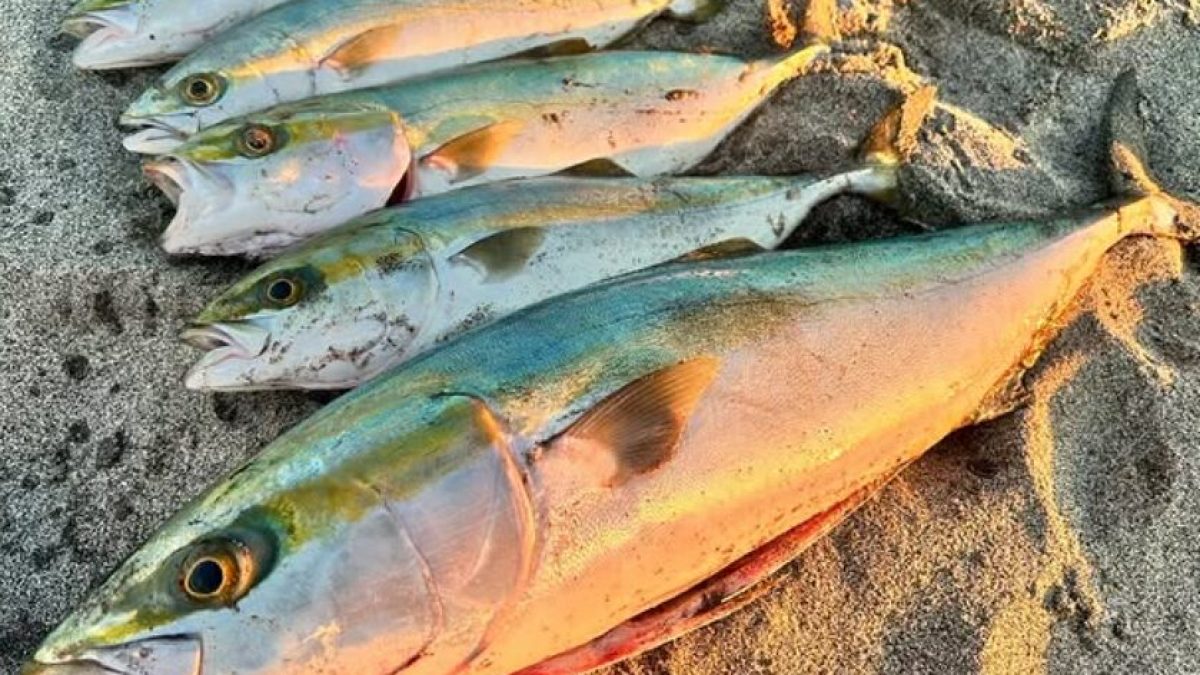
The worst day on a beach is not the day you do not get a bite. It is the day you hook a big yellowtail and lose it at your feet.
Off a breakwater you have a net and a fixed platform. On a beach you usually have neither, and you have waves on top. Landing the fish is a skill of its own. This is the whole sequence, from the moment of the hit to the fish lying safely on dry sand.
A hooked yellowtail always makes one hard run straight away. Try to stop it by force and the hook straightens, tears out of the flesh, or the line breaks.
While it is running, do not wind. Let the drag do its job, and start winding the moment the fish stops. Run, stop, wind, repeat – that is the basic rhythm of the fight.
As a guide, the drag should give line in a steady grind when you pull hard on it with both hands. Tightening it in a panic after the hook-up is exactly when lines break, which is why it has to be set before your first cast. There is a full explanation in my drag setting guide.
| Rod angle | What it does |
|---|---|
| Straight up (near 90°) | Only the tip is working. Easier to lose the fish, and a real risk of breaking the rod |
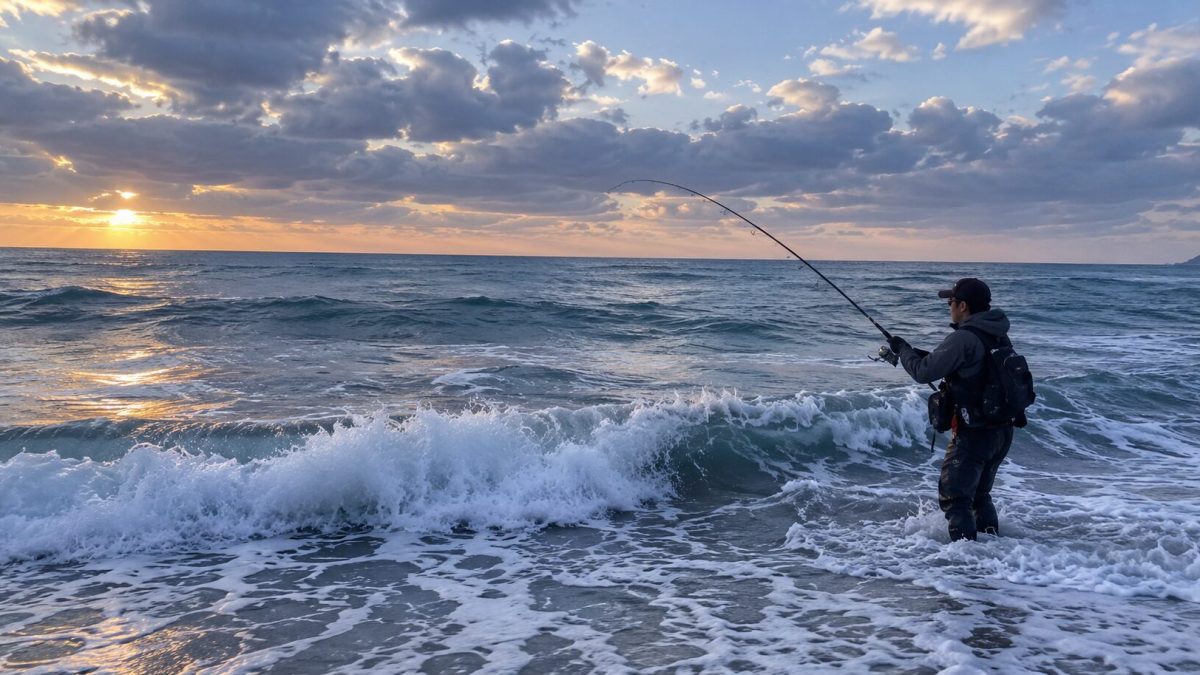
| Around 45° | The whole blank is working. This is the default |
| Almost flat | The fish is in charge. Only as a brief position while it is running |
If the fish runs sideways, lay the rod over towards the direction it is running. Pulling against it from the opposite side lets the hook work loose.
On a beach, lost fish cluster overwhelmingly in the last few metres. Three things happen there at once:
Which means the worst possible thing to do is stand at the water’s edge and keep winding.
The answer is to let the sea do the work.
Try to drag it up on the backwash and the sea pulls the fish – and you – the other way, the tension goes, and the fish is gone. The rule to remember: up on the push, wait on the pull.
Carry it above the reach of the waves first. Stopping to take a photo and losing the fish to the next wave is a common, and entirely avoidable, story. Then deal with it quickly so it is worth eating – the steps are in how to bleed and chill a yellowtail on the beach.
Laying the rod flat on the sand puts sand in the guides and the reel. A rod stand makes this whole stage much easier.
Most line breaks on a beach are caused by damage done before the fight. Sand, shell and waves wear leaders far more than you would think.
Sometimes you are not sure whether the weight is a fish or the bottom.
| What you feel | Probably |
|---|---|
| Irregular heavy knocks | A fish – with yellowtail you feel the head shakes |
| Just heavy, not moving | Snag, weed or rubbish |
| Heavy but moving steadily sideways | A ray or a big fish |
| Weight changes with each wave | Weed being pushed by the waves |
If you cannot tell, do not just heave on it. Walk a few steps along the beach to change the angle; that often makes it obvious.
It helps where the water is calm and you are standing on something high, such as a river-mouth wall. On an ordinary beach, sliding the fish up the sand is the standard method. And since beach fishing means walking, not carrying extra gear is part of the decision.
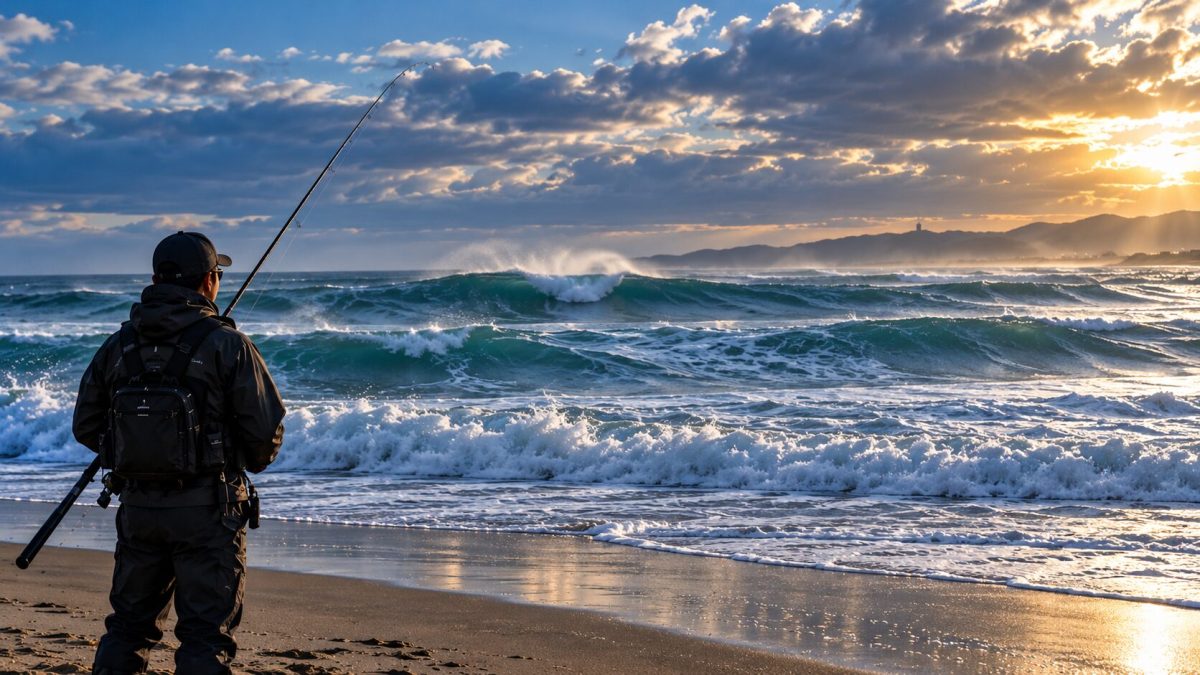
Always walk back to the beach while you bring the fish in. Trying to land a big fish while standing in the water means handling it on unstable footing, which is dangerous. During a fight with a yellowtail, securing your own footing comes first.
Flounder do not run like yellowtail, but they have hard mouths and the hook tears out easily, so they are often lost to a torn mouth at the water’s edge. The same “up on the push” approach works.