Water Temperature for Surf Fishing: When Flounder and Yellowtail Switch On
minagiman
Minagiman's Fishing Adventures in Japan
More fish are lost to a badly set drag than to any lure choice. Too tight and the line or the hook hold gives way on the first run. Too loose and you cannot set the hook or stop a fish before it reaches the rocks. The good news is that drag is one of the few things in fishing with a clear rule.
Set the drag to roughly one third of the breaking strain of the weakest part of your line. That margin exists because:
Note weakest part. If your leader is weaker than your braid, calculate from the leader.
Japanese braid is sold by the gō number, which measures thickness rather than strength – so work from the lb rating printed on the spool, not the gō number. (The PE line guide explains why.)
| Line breaking strain | Approx. kg | Drag setting (about one third) |
|---|---|---|
| 12 lb | 5.4 kg | 1.8 kg |
| 16 lb | 7.3 kg | 2.4 kg |
| 20 lb | 9.1 kg | 3.0 kg |
| 25 lb | 11.3 kg | 3.8 kg |
| 30 lb | 13.6 kg | 4.5 kg |
| 40 lb | 18.1 kg | 6.0 kg |
For orientation: PE 1.2 is typically around 20 lb, PE 1.5 around 25 lb and PE 2.0 around 30 lb, but always check your own spool. Japanese reel spec sheets also list a practical drag figure separately from the maximum – that is the manufacturer’s own suggestion for a sensible working setting, and you will see it in my Stradic and Twin Power spec tables.
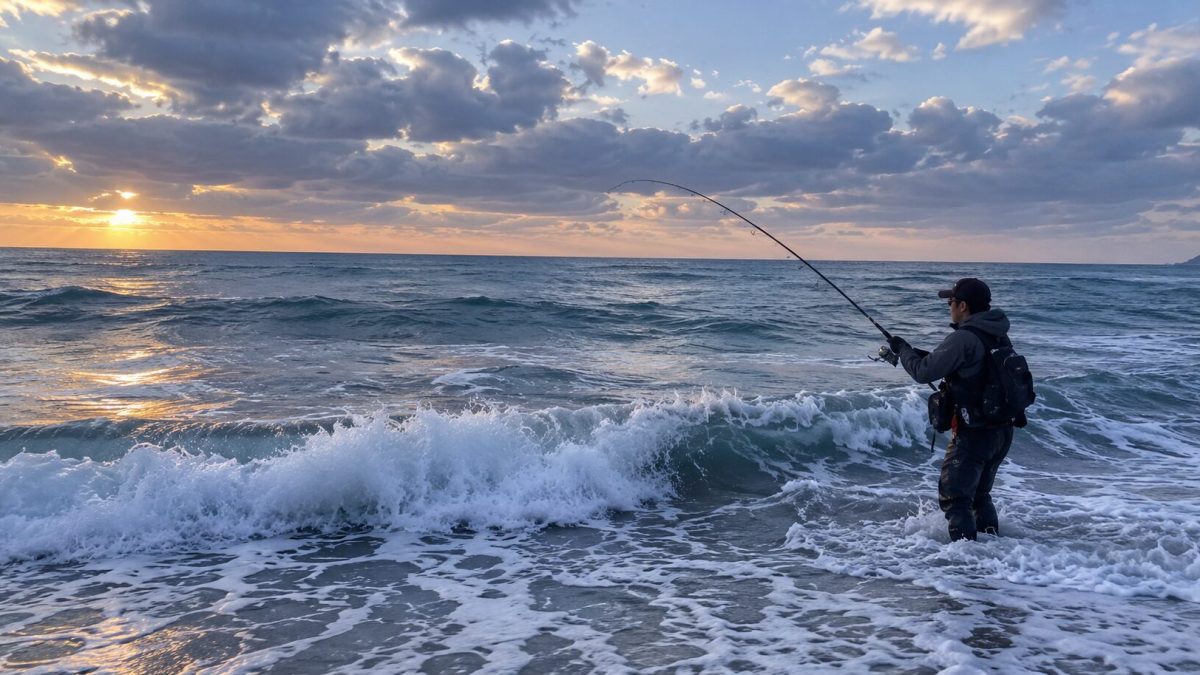
A spring scale is the precise way. On a beach, the practical way is the hand-pull test: thread the line through the guides, hold the rod up at about 45 degrees as if into a fish, grab the line in front of the rod and pull it straight.
The line should slip out steadily with a firm pull – not run out freely, and not refuse to move. Japanese anglers describe the sound as jiri-jiri: a steady, grinding release. If a light pull lets line slide out, it is too loose. If you have to heave to move it, it is too tight.
Do the test with the rod raised, not pointed straight at the line. The guides add friction, and a raised, loaded rod is how you will actually be fighting the fish.
| Target | Setting | Why |
|---|---|---|
| Pelagics (yellowtail etc.) | Slightly looser | Fast, powerful first runs. The drag needs to give line without a shock that pulls the hook |
| Flounder and flatfish | Slightly tighter | You need a firm hook set in a bony mouth, and you need to lift a fish that plants itself on the bottom |
| Light game (small fish, light line) | Around the rule, carefully | Thin line and tiny hooks leave little margin either way |
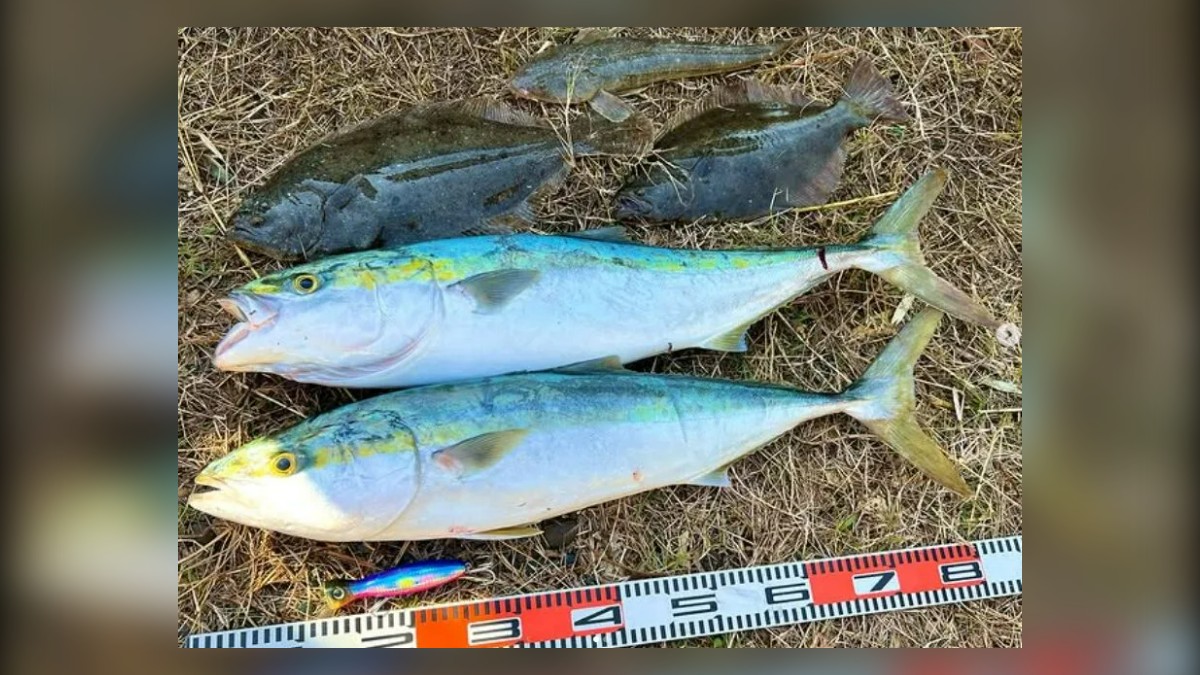
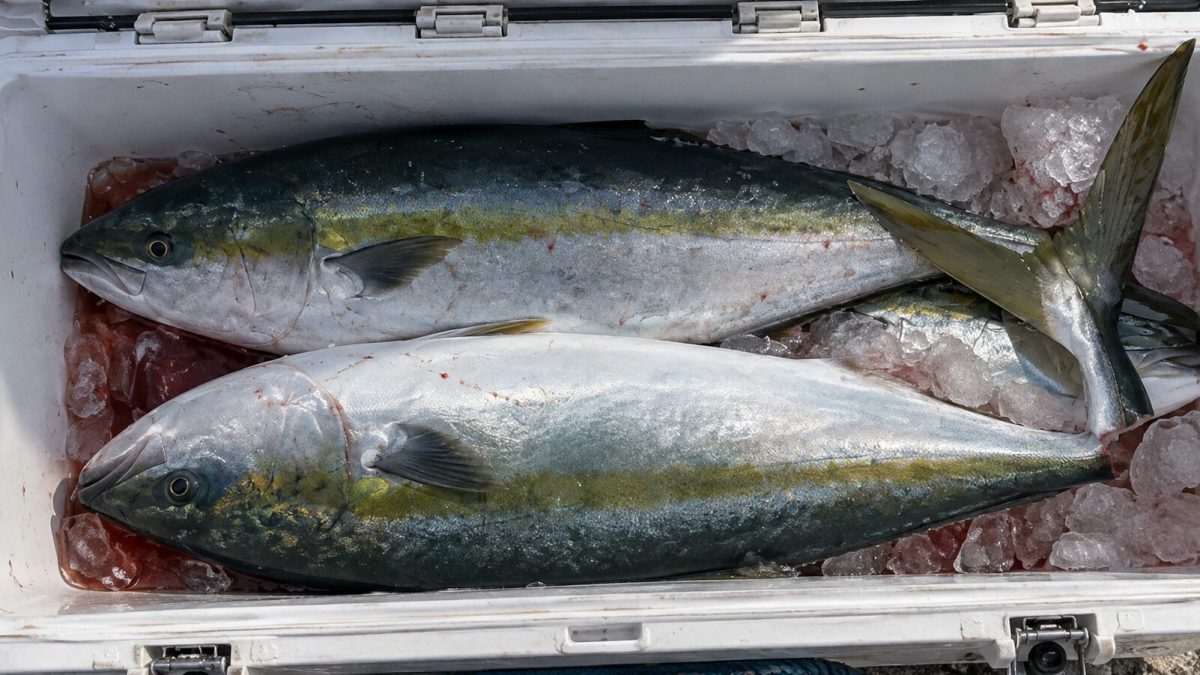
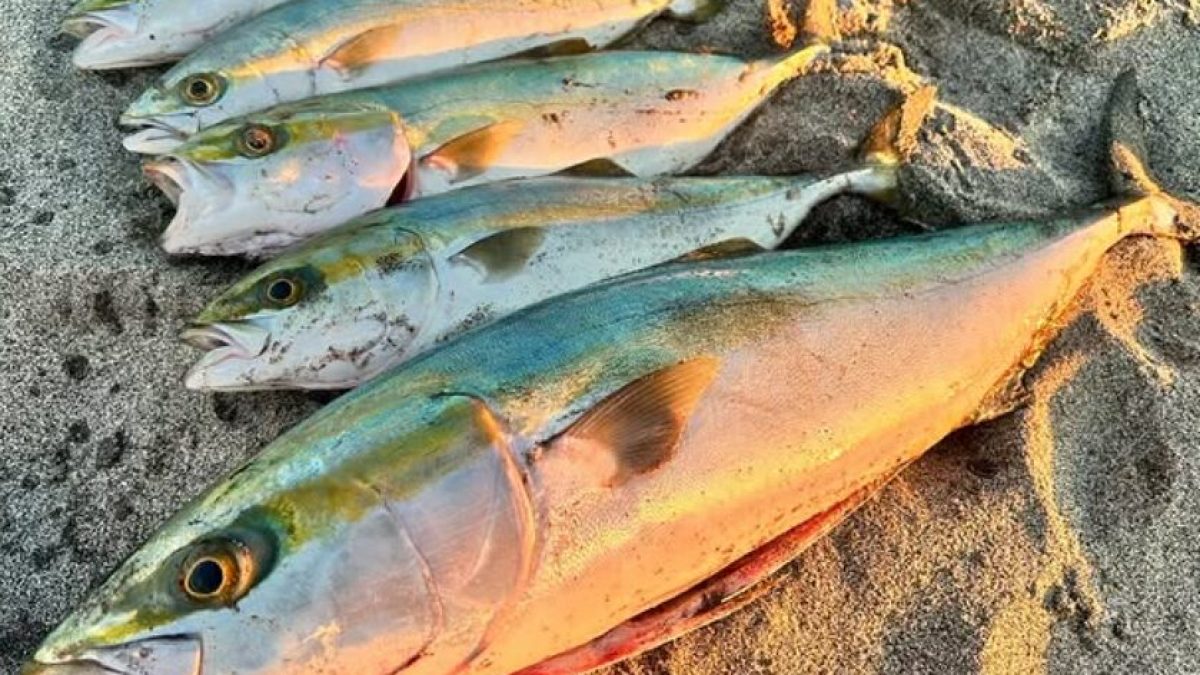
A vague “about right” drag gets away with it on flounder. It does not survive the first run of a decent yellowtail – too tight and the line breaks or the hook opens, too loose and the fish never comes in and eventually falls off.
The instinct when a fish is taking line is to tighten the drag. Don’t. Tighten mid-fight and the load hits the line all at once – and in the heat of the moment, people nearly always overdo it.
If you need more pressure for a moment, lightly press the edge of the spool with a finger instead. You control exactly how hard, and you can let go instantly when the fish lunges. Take the finger off and you are back at a setting you trust.
As a fish strips line, the spool gets smaller – and the same drag setting now takes more force to pull line off. Water resistance on a long length of line adds more. So a drag that was right at the start of a long run is effectively tighter at the end of it. That is one more reason not to tighten during the fight.