Tide, Wind and Swell: How to Decide Whether to Fish the Beach
minagiman
Minagiman's Fishing Adventures in Japan
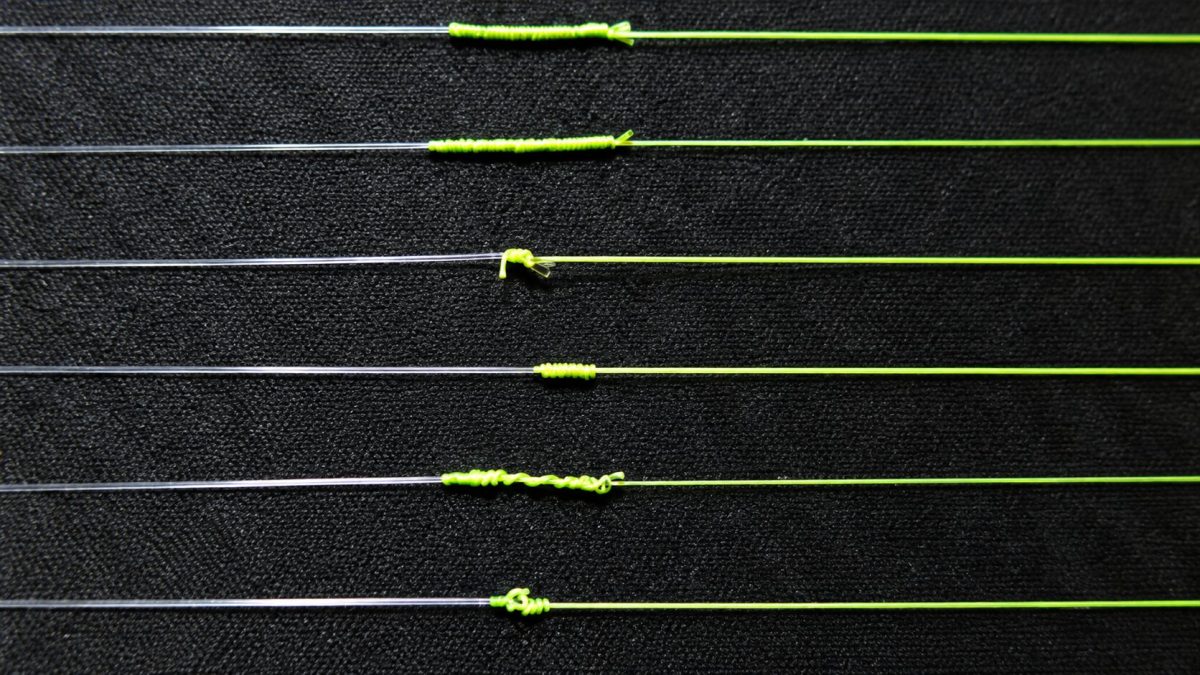
Joining braid to leader is the most frustrating job in surf fishing. It is dark, it is windy, your fingers are covered in sand, and the fish are feeding right now. Very few people can tie a clean FG knot in those conditions.
So this is not about which knot is strongest. It is about what actually works on a beach – and the answer is different at home and on the sand.
| Type | How it works | Examples | Trade-off |
|---|---|---|---|
| Friction knots | The braid is woven around the leader and gripped by friction | FG knot, SC knot | Strong and slim, but slow to tie |
| Tied knots | A knot is formed to hold the lines | Double uni (densha-musubi in Japanese), triple eight knot | Fast and easy, but bulkier and weaker |
People say “FG or nothing”. That is only true if you tie it well. A 100-point knot tied at 70 percent is worse than an 80-point knot tied perfectly.
On a beach you cast a long way, all day, and the knot passes through the guides thousands of times. Slim wins. If you have time at home, tie an FG.
Line breaks on a beach tend to arrive at the worst possible moment:
You try to tie an FG, lose ten or fifteen minutes, and the feed is over. That is the most wasteful way to lose a session.
The single most effective fix. Leave a longer leader when you tie it at home. When the lure end gets damaged, cut the end off and re-tie the lure – no new FG needed. A short leader means any damage sends you back to the braid knot. A little extra length drastically cuts how often you need to tie an FG on the beach.
The most reliable fix. Tie the FG at home on a spare spool. On the beach, recovery is a spool swap – under a minute. If your reel came with a spare spool, use it. Even just for yellowtail season, it dramatically reduces the chance of losing the moment.
Then have one quick knot you can tie in the dark and the wind. The double uni or the triple eight both work.
It is weaker than an FG and the bigger knot costs some distance. But it beats standing on the beach unable to fish. Get back fishing with it, then tie a proper FG when you are home and calm.
The goal is to re-tie before it breaks, not after.
| Situation | Action |
|---|---|
| After landing a fish | Run the leader through your fingers. Any roughness: replace it |
| After freeing a snag | It is very likely damaged. Re-tie |
| After a Spanish mackerel or ribbonfish | The teeth have probably touched it. Always check |
| The knot feels different going through the guides | Sign the knot is loosening |
| Nothing has happened | Check once at the start of every session anyway |
However carefully you tie it, a bad size match between braid and leader will not hold. Too big a difference and the wraps do not bite; too close and the knot gets bulky. The right pairings are in the PE line and leader chart. Frayed braid also will not hold wraps well – check your braid as well as your leader.
Yes. But learn it at home. Tie it dozens of times in good light until your hands know it, then take it to the beach. Trying it for the first time on the sand almost always fails.
They make it more consistent, especially while you are learning. The downside on a beach is more gear to carry. A sensible split: tool at home, quick knot or spare spool on the beach.
On a beach, many anglers use about one hiro – an arm span, roughly 1.5 m. Too long and the knot sits inside the guides at the start of the cast; too short and you are re-tying constantly. Adjust to your rod length.