Best Tackle Shops to Visit in Japan: Chains, Used Tackle and Tax-Free Tips
minagiman
Minagiman's Fishing Adventures in Japan

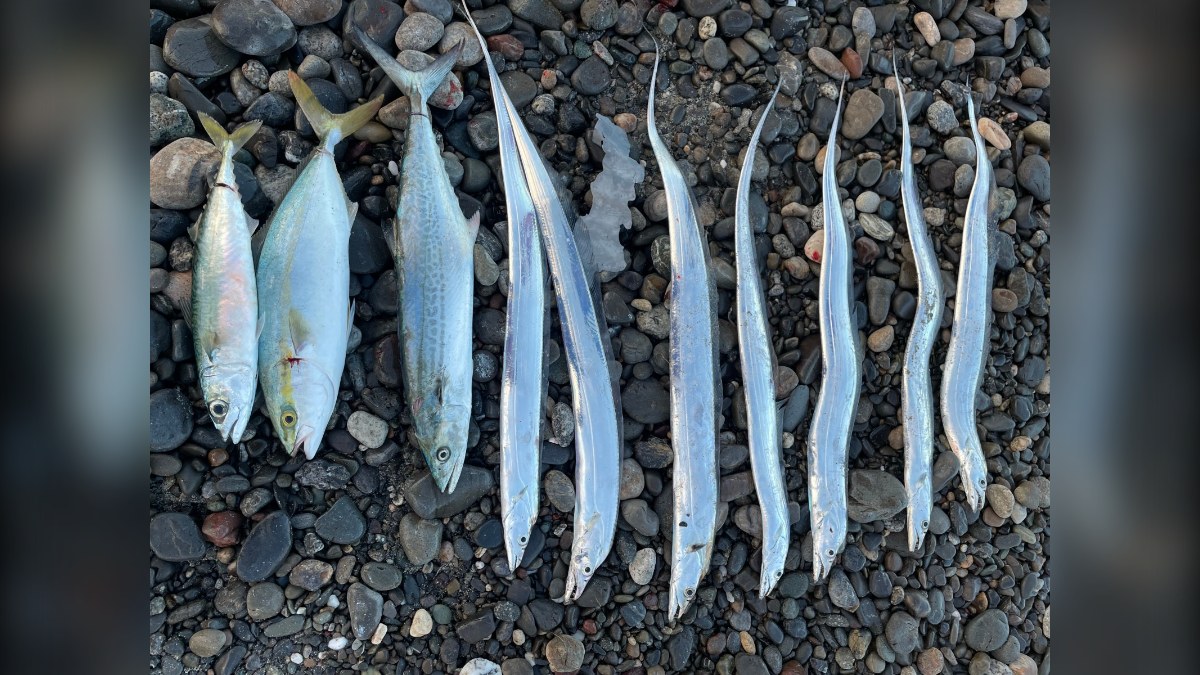
Ribbonfish are one of the most popular boat targets in Japan, and in places like Tokyo Bay and Osaka Bay the boats fill up through autumn and winter. The most addictive way to catch them is tenya tachiuo: a weighted hook with a whole sardine wired onto it, worked slowly in mid-water while you watch the rod tip for the tiniest bites.
I am Minagiman, a Japanese angler who fished the Enshu-nada surf in Shizuoka for many years and now lives on the Gold Coast in Australia. I recently wrote a beginner’s guide to tenya tachiuo on my Japanese blog, and this is the English version for visitors and overseas anglers who want to understand the method, whether you plan to join a Japanese party boat or try the idea at home on hairtail or other ribbonfish.
Tachiuo is the Japanese name for the largehead hairtail, a long silver ribbonfish with very sharp teeth. A tenya is a lure-like rig that combines a lead weight and a large hook in one piece. For tachiuo, you lay a baitfish (usually a sardine) on the tenya and wrap it tightly with thin wire, then drop it to the depth the captain announces and work it up and down.
What makes the method special is the way tachiuo feed. They often do not swallow the bait in one go. They nip it, bite it and hold it, then follow it. You watch the rod tip, read those small movements, and choose the moment to set the hook. That game of “touch, chase, eat, hook” is why so many Japanese anglers are hooked on it.
If you want to learn more about the fish itself, including the Japanese “finger” system used to describe their size, read my ribbonfish (tachiuo) guide.
| Item | Typical choice | Notes |
|---|---|---|
| — | — | — |
| Rod | Dedicated tenya tachiuo rod, about 1.7 to 1.9 m | 8:2 action is standard; a tip that is easy to see |
| Reel | Small baitcasting (overhead) reel | A line counter makes depth control easy |
| Main line | PE 1 to 1.5 go, 200 m or more | Follow the boat’s specified line size |
| Leader | Fluorocarbon around 8 to 12 go | Follow the boat’s instructions on length and strength |
| Tenya | 30 to 50 go is common | Must match the weight the boat specifies |
| Bait | Frozen sardine (sometimes saury in some areas) | Many boats supply bait |
Because you detect bites by watching the tip, a dedicated tenya tachiuo rod helps enormously. A general boat rod will work, but the bites are much harder to see. Rods are often described by their action as a ratio such as 8:2, 7:3 or 9:1, showing where the rod bends. 8:2 is the standard for tenya tachiuo. A softer 7:3 helps on days when the fish only nibble, and a stiffer 9:1 suits anglers who like to strike actively. For a first rod, an 8:2 is the safe choice.
Japanese makers such as Shimano and Daiwa both sell dedicated tachiuo tenya rods, from affordable entry models to high-end versions with very sensitive tips. If you want to understand how Japanese rods are labelled, see my guide to Japanese rod model names decoded.
Tachiuo often hold at a specific depth, and the captain will announce it, for example “fish at 40 m, 10 m off the bottom”. A small baitcasting reel with a line counter lets you drop to that depth quickly and return to the depth where you got a bite. Some anglers move on to small electric reels so they can wind very slowly and steadily.
PE around 1 to 1.5 go is standard, but on Japanese party boats the captain may specify a line size so that everyone’s lines sink at the same speed and do not tangle. Japanese line sizes are explained in my PE line and leader chart. A fluorocarbon leader of around 8 to 12 go (roughly 30 to 40 lb) gives some protection from the teeth.
The single most important rule is use the tenya weight the boat specifies. On a Japanese party boat (noriai-sen), weights are usually fixed per boat so that everybody’s rig falls at the same speed and lines do not cross. Check the weight when you book or on the boat’s website.
Weights in Japan are given in go, where 1 go is 3.75 g. That makes the common 30 to 50 go range about 110 to 190 g. On days with fast current or in deeper water, the boat may ask for heavier tenya.
| Tenya weight (go) | Approx. grams |
|---|---|
| — | — |
| 30 go | about 113 g |
| 40 go | 150 g |
| 50 go | about 188 g |
Bring two or three tenya of the specified weight in different colours. Tachiuo teeth damage them, and you can also lose them on the bottom. In Japan a single tenya costs from around 1,000 yen.
For general advice on booking a boat, what to bring and how party boats work, see my guide to party boat (noriai-sen) fishing in Japan.
Frozen sardine (iwashi) is the standard bait, though some areas use other fish such as saury. Lay the sardine on the tenya’s base and wrap it tightly with the wire attached to the tenya.
A bait that has been chewed to pieces rarely gets eaten. I like to tell beginners that the condition of the bait is half of your catch.
Drop the tenya to the depth the captain calls, then start working it. The basic action combines three things:
| Move | How to do it | When it works |
|---|---|---|
| — | — | — |
| Lift (shakuri) | Raise the rod tip a little to make the tenya jump | To make tachiuo notice the bait |
| Pause (stay) | Hold the rod still and let the tenya hang | To give the fish time to bite |
| Wind | Wind the reel slowly to search different depths | When fish are higher in the water, or to make them chase |
For example: two short lifts, pause for two or three seconds, wind one turn of the reel, then lift again, working up and down around the announced depth.
Most bites come during the pause or just after a lift. Do not keep the tenya moving all the time; making a pause is the key.
The most common beginner mistake is striking the moment the rod tip moves.
At first, tachiuo nip the bait or hold it without moving. Striking at this stage usually fails, because the hook on the tenya is not yet in the fish’s mouth.
Once you understand the flow of “touch, chase, eat, hook”, tenya tachiuo becomes much more fun. On your first trip you will probably miss lots of bites. That is completely normal. Watching the rod tip of an experienced angler next to you, and when they strike, is one of the best ways to learn.
In winter the water cools, tachiuo become less active, and the bites become smaller and less frequent. On those days:
On slow days, a rod with a sensitive, easy-to-see tip makes the biggest difference, which is why many Japanese anglers are so particular about their tenya rods.
| Item | Typical cost | Notes |
|---|---|---|
| — | — | — |
| Party boat fare | Often in the 10,000 yen range | Whether bait and ice are included depends on the boat |
| Rental tackle | Depends on the boat | A good way to try it first |
| Dedicated rod | From around 10,000 yen | Entry models are fine to start |
| Small overhead reel | From around 10,000 yen | A line counter is useful |
| Tenya | From around 1,000 yen each | Bring spares |
You do not need to buy everything at once. For most people, the best way to start is one trip with rental tackle, then buying your own gear if you enjoy it.
Yes. On a party boat, the captain tells you the depth, so if you drop the tenya to that depth and work it as described, you have a good chance of catching fish. Rental tackle is a good way to start.
The weight the boat specifies. Most Japanese boats fix the weight to prevent tangles, so check when you book.
Many boats provide frozen sardines, but some ask you to bring your own. Check in advance.
You are probably striking while the fish is only nibbling. After a touch, keep working the tenya to make it chase, and strike when the tip pulls down firmly.
Tenya fishing is about reading small bites with bait; jigging for tachiuo uses metal jigs and is simpler to set up. Some boats run only one style, so match your tackle to the boat you book.
Tenya tachiuo is a game of watching the rod tip: let the fish touch, make it chase, and strike when it really eats. Use a dedicated tenya rod, a small overhead reel and PE 1 to 1.5 go, match the tenya weight to the boat, wire the sardine on straight and tight, and mix lifts, pauses and slow winding. In winter, slow everything down. Cold boats are tough, but a bucket of silver ribbonfish makes it worth it.