How to Customize the DUEL Monster Shot
minagiman
Minagiman's Fishing Adventures in Japan
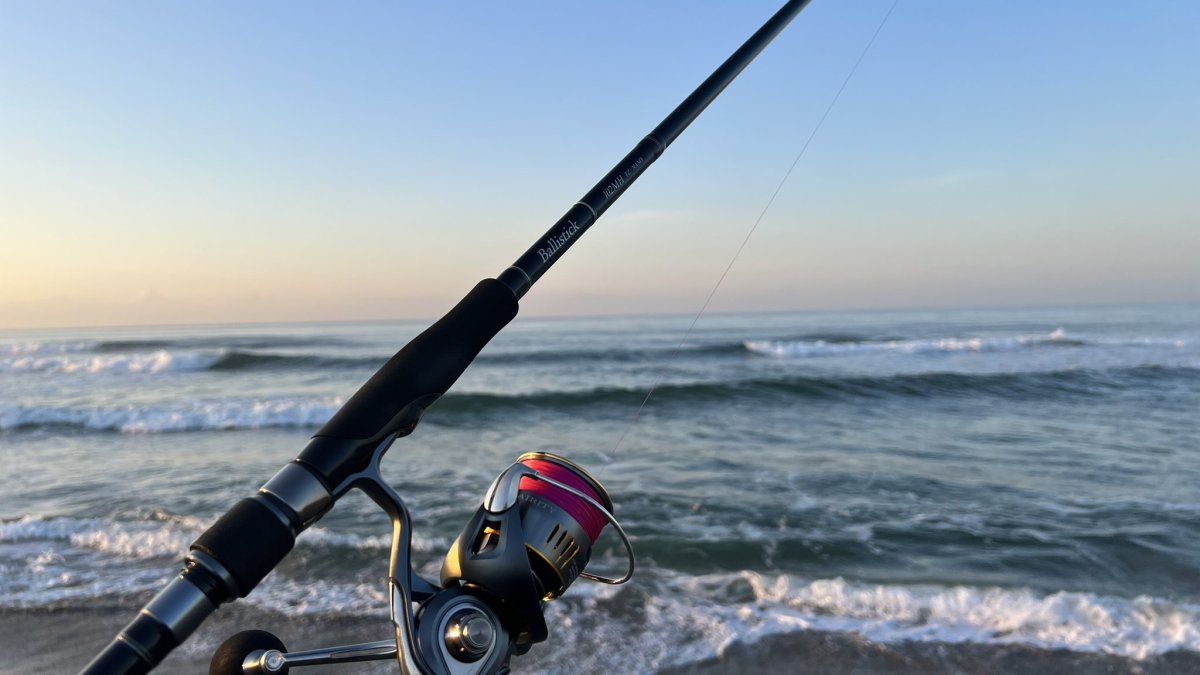
If you have ever bought Japanese braid and wondered why the spool says PE 1.5 instead of a pound rating, this page is the answer – and the chart below is the one I actually use when I spool up.
The gō (号) number is a thickness unit, not a strength unit. It comes from the traditional Japanese line-sizing system and describes diameter, not breaking strain. Two braids both labelled PE 1.5 can have noticeably different lb ratings depending on how many strands they use and how tightly they are woven. So use the gō number to choose a line that fits your reel and your guides, and read the lb figure printed on the box for strength. Never assume a conversion.
Leaders are sized the same way, which is why a Japanese leader spool carries both a gō number and a lb figure. That part is more consistent, which is what makes the chart below usable.
| PE (gō) | Leader (gō) | Leader (lb) | Class | Typical use |
|---|---|---|---|---|
| 0.06 | 0.6-0.8 | 2-2.5 | Light game | Single jighead ajing (light horse mackerel) |
| 0.08 | 0.6-0.8 | 2-3 | Light game | Single jighead ajing |
| 0.1 | 0.6-0.8 | 2-4 | Light game | Ajing, mebaring (rockfish) |
| 0.2 | 0.8-1 | 3-4 | Light game | Ajing, mebaring |
| 0.3 | 1-1.2 | 4-5 | Light game | Ajing, mebaring |
| 0.4 | 1-1.5 | 5-6 | Light game | Float and Carolina rigs, chinu (black seabream), light squid jigging |
| 0.5 | 1.5-2 | 6-8 | Light game | Float and Carolina rigs, chinu, light squid jigging |
| 0.6 | 2-2.5 | 8-10 | Mid game | Chinu, seabass, squid jigging (eging), super-light shore jigging, tai-rubber |
| 0.8 | 2.5-3 | 10-12 | Mid game | Chinu, seabass, eging, SLS (small yellowtail), tai-rubber, flatfish |
| 1.0 | 3-4 | 12-16 | Mid game | Chinu, seabass, eging, SLS, tai-rubber, rockfish, flatfish |
| 1.2 | 4-5 | 16-20 | Light shore | Chinu, seabass, tai-rubber, rockfish, flatfish, light shore jigging (small to mid pelagics) |
| 1.5 | 5-8 | 20-25 | Light shore | Big seabass, hirasuzuki, rockfish, flatfish, light shore jigging |
| 2.0 | 8-10 | 30-35 | Light shore | Hirasuzuki, big rockfish, light shore jigging |
| 2.5 | 10-12 | 35-40 | Big game | Hirasuzuki, big rockfish, shore jigging |
| 3.0 | 12-14 | 40-50 | Big game | Shore jigging, shore plugging, mid to large pelagics |
| 4.0 | 14-16 | 50-60 | Big game | Shore jigging, shore plugging, large pelagics |
| 5.0 | 16-20 | 60-70 | Big game | Shore jigging and plugging, hiramasa and kanpachi, tuna, offshore casting |
| 6.0 | 20-24 | 70-80 | Big game | Shore jigging and plugging, large amberjack, tuna, offshore casting |
| 8.0 | 24-32 | 80-100 | Big game | Offshore casting, GT, bluefin, marlin, kue (grouper) |
| 10.0 | 32-40 | 100-130 | Big game | Offshore casting, GT, bluefin, marlin, large grouper |
Read it as a starting point rather than a rule. If you fish clean sand you can go lighter; if you fish rock you go heavier.
| Situation | Leader length |
|---|---|
| Surf, sand, few snags | About one hiro (roughly 1.5 m – one arm span) |
| Seabass, river mouths and harbours | 1 to 1.5 m |
| Rocky shores, tetrapods, heavy structure | 2 to 3 m |
| Squid jigging (eging) | 1 to 1.5 m |
| Ajing and mebaring | 30 cm to 1 m |
| Shore jigging for large pelagics | 1.5 to 2 m |
The practical limit is your rod. A leader long enough that the knot sits inside the guides at the start of the cast will cost you distance and, in the dark, will eventually cost you a cast. Longer is safer for abrasion, shorter is easier to fish.
| Fluorocarbon | Nylon | |
|---|---|---|
| Abrasion resistance | Strong | Average |
| Stretch | Low (better feel) | High (absorbs shock) |
| Density | Heavy, sinks | Light, tends to float |
| Price | Higher | Lower |
| Suppleness | Stiff | Supple and easy to knot |
For most shore lure fishing I use fluorocarbon, because the ground is what kills leaders. Nylon makes sense when you want a lure to stay high in the water, when you are fishing topwater, or when you want the extra stretch on a short rod at close range.
The FG knot is the standard in Japan and it is worth learning, because it is thin, it passes the guides cleanly and it holds. But the honest version of this advice is: learn one knot you can tie in the dark, in wind, with cold hands. A knot you can tie in forty seconds on the beach beats a knot you can only tie at home. Carry a spare spool with line already joined, and if the tide is going off, re-tie with something simple and keep fishing.
Up to a point. Too heavy and the leader stops the lure swimming properly, especially with small minnows and light jigheads, and the knot gets bulky enough to catch in the guides. The pairing in the chart exists to keep the knot small and the lure alive.
Distance. On a beach, thinner braid means more casting range and less bow in the line when there is wind or current, and both of those matter more than raw strength when the drag is set correctly.
Usually the knot was tied on braid that had already been damaged. Cut back a metre of braid before re-tying – the last stretch has been through the guides a thousand times.