DUO Beach Walker Haul Review: Japan’s Default Flounder Lure, Honestly Assessed
minagiman
Minagiman's Fishing Adventures in Japan
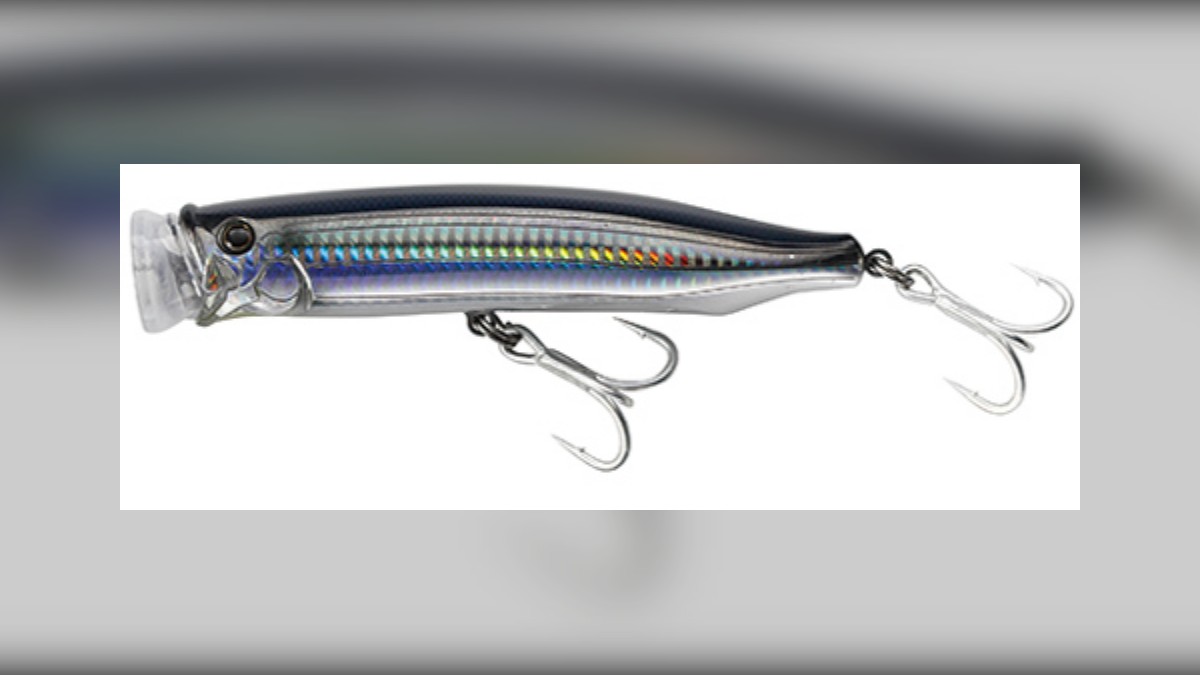
As the water warms from spring into early summer, fish move up towards the surface – and that is when poppers start to earn their place. Tackle House’s Contact Feed Popper is one of the classic Japanese poppers, and one of the few that comes in a size for almost every job: from a 70 mm light-game model up to a 175 mm offshore tuna popper.
This is the whole range explained, so you can pick the right size.
| Model | Length / weight | Built for |
|---|---|---|
| CFP70 | 70 mm / 9.5 g | Light game – black bream (kurodai) and harbour seabass |
| CFP100 | 100 mm / 22 g | Small-bait patterns offshore; shore pelagics; heavy-duty hooks |
| CFP120 | 120 mm / 30 g | The original – the standard seabass size, also used for shore pelagics |
| CFP135 | 135 mm / 45 g | The all-rounder – seabass tackle to tuna tackle, shore or boat |
| CFP150 | 150 mm / 60 g | Offshore and big shore pelagics; with or without hooks |
| CFP175 | 175 mm / 74 g | The biggest – casting at boiling tuna and large pelagics offshore |
A scaled-down version of the bigger models for black bream and harbour seabass. Even a light jerk produces a proper “pop”.
Compact, with heavy-wire hooks. It works offshore when the bait is small, and handles shore pelagics and even light game.
The first Feed Popper. The standard seabass size, and popular with shore anglers chasing pelagics.
Usable on anything from seabass tackle to tuna tackle. A fixed rear weight gives excellent distance, and it makes a strong commotion from the moment it lands.
Both carry Tackle House’s R-Unit, which gives a natural, irregular sway that does not simply follow the waves – so the popper keeps working even when you pause it. The 150 is sold with or without hooks; the 175 is the long-distance tool for breaking fish offshore.
There are plenty, but three types cover nearly everything: a standard natural, a clear for calm, clear water, and a chartreuse for low light or coloured water.
The Feed Popper earns its reputation by being simple: stable, long-casting, and loud in the right way. With six sizes, there is a Feed Popper for most surface fishing you will do in Japan – start with the 120 or 135, and add others as you need them.