Pacific Bluefin Tuna Rules for Anglers in Japan (2026): Registration, the 30 kg Limit and What to Do if You Hook One
minagiman
Minagiman's Fishing Adventures in Japan

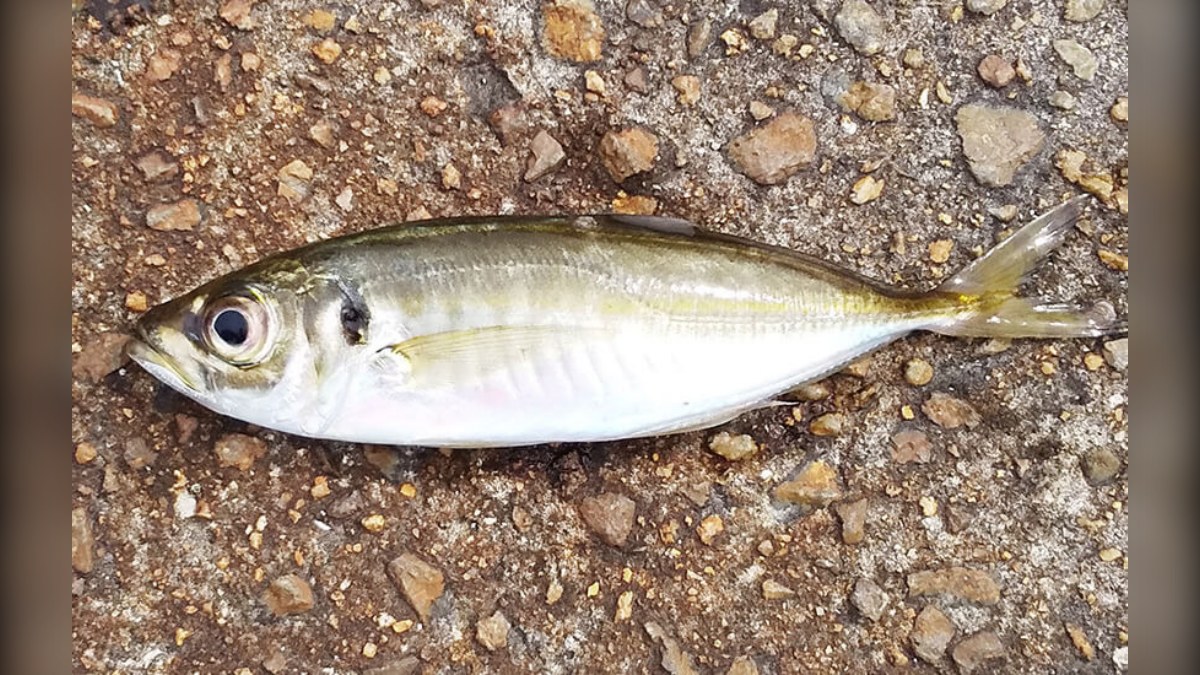
If you walk along any harbour wall in Japan on a summer or autumn evening, you will see families, kids and old-timers all doing the same thing: dropping a string of tiny flies into the water and pulling up horse mackerel, sardines and small mackerel two or three at a time. That rig is the sabiki, and it is probably the most popular way to catch fish in Japan.
I am Minagiman, a Japanese angler who fished the Enshu-nada surf in Shizuoka for many years and now lives on the Gold Coast in Australia. Outside Japan, most anglers know the sabiki as a “bait catcher” for live bait. In Japan it is a complete style of fishing in its own right, with its own chum baskets, regional variations and etiquette. This guide explains how the rig is built, how Japanese anglers fish it, and how to avoid the famous sabiki tangle.
The word sabiki started life as a product name. The Japanese hook maker Hayabusa commercialised these multi-fly rigs in the 1970s, and the name stuck so well that English-speaking anglers now use “sabiki” for any rig of this type, much like a brand name that becomes the everyday word for a product. Japanese anglers simply call this style sabiki-zuri (sabiki fishing).
A typical rig has a main line (the “trunk”) with several branch lines, each about 10 to 15 cm long and spaced roughly 15 cm apart. Japanese packs commonly carry six hooks, while English-language references describe rigs with anywhere from about six to ten hooks. Each hook is dressed with something small and shiny: real fish skin, a strip of holographic film, a tiny feather or a scrap of coloured rubber. The goal is to imitate the plankton, larval fish and tiny shrimp that small schooling fish feed on.
At one end of the rig there is a snap for a sinker or a chum basket, and at the other end a swivel or loop that you tie to your main line.
| Part | Romanised name | What it does |
|---|---|---|
| — | — | — |
| Main line of the rig | motoito | The trunk that the droppers hang from |
| Branch lines | edasu | Short droppers, each with one hook |
| Hooks and dressing | hari | Small hooks dressed with fish skin, film or feather |
| Chum basket | kago | A small cage or basket filled with chum |
| Sinker | omori | Keeps the rig straight and takes it down |
| Chum | maki-e / ami-ebi | Usually tiny frozen shrimp (ami) or krill |
If you are used to international hook sizes, Japanese sabiki packets can be confusing. Internationally, a size 12 hook is smaller than a size 8. Japanese hooks are measured in go, and here a bigger number means a bigger hook.
As a rough rule, small go numbers are for tiny sardines and baby horse mackerel early in the season, and larger go numbers are for adult horse mackerel, mackerel and bigger fish later in the year. English-language guides usually describe international sabiki sizes in the range of about 8 to 14 for typical bait-sized fish. When you buy in Japan, the packet shows the hook size, the line thickness of the droppers and the main line, and usually a picture of the target fish. If you are not sure, ask the shop what size the local fish are and choose the hook size they recommend.
The line on the packet is also in Japanese go sizes. If you want to understand those numbers, my PE line and leader chart explains how Japanese line sizing works.
In Japan, sabiki fishing almost always uses a chum basket. The basket releases a cloud of tiny shrimp, which pulls the school in and keeps it next to your flies. There are two ways to set this up, and they are often described as a regional difference.
The chum basket is clipped to the bottom of the sabiki rig and also acts as the sinker. It is widely associated with the Kanto region around Tokyo. You lower the rig to the depth where the fish are, give a sharp lift to shake chum out of the basket, then hold the rod still so the flies hang in the chum cloud. It is simple and works very well when fish are near the bottom or in the middle of the water column.
The chum basket goes at the top of the rig, above the flies, and a separate sinker hangs at the bottom. This style is widely associated with the Kansai region around Osaka and Kobe. Because chum falls downward, it drifts down over the flies below the basket, which many anglers feel matches the flies to the chum more naturally.
| Shita-kago (basket below) | Uwa-kago (basket above) | |
|---|---|---|
| — | — | — |
| Basket position | Bottom of the rig, also works as the sinker | Top of the rig, sinker at the bottom |
| Region often associated | Kanto (Tokyo area) | Kansai (Osaka and Kobe area) |
| How chum reaches the flies | Fish rise into the cloud above the basket | Chum sinks down over the flies |
| Good for | Fish near the bottom, simple setups | Fish feeding in mid-water |
Both styles catch plenty of fish. My advice for a visitor is to buy whatever the local tackle shop sells most of; it is usually the style the local anglers use, and it is matched to local conditions.
You do not need anything special. In Japan, many people fish sabiki with an inexpensive telescopic rod and a small spinning reel, and tackle shops near popular harbours often sell complete starter sets.
| Item | Typical choice |
|---|---|
| — | — |
| Rod | Telescopic or general-purpose rod around 2.7 to 3.6 m, or a light shore rod |
| Reel | Small spinning reel (around 2500 to 3000 size) |
| Main line | Nylon is easy for beginners; PE is fine with a leader |
| Rig | Sabiki packet sized for the local fish |
| Basket and sinker | Shita-kago or uwa-kago basket, or a plain sinker |
| Chum | Frozen ami shrimp blocks or tubes of chum, sold at tackle shops |
| Extras | Bucket, rag or towel, scissors, a small rod holder, cooler with ice |
A longer rod helps, because the whole rig is long. With six hooks, a basket and a sinker, the rig can be around 1.5 to 2 m, and a short rod makes it hard to lift the last fish over the railing.
If the fish are not near the bottom, try different depths. Start a few metres below the surface and work down until you find the school. Once you find the depth, remember how many turns of the reel it takes and go back to it.
Every angler who has used a sabiki knows the moment when six hooks become one ball of line. A few habits prevent most of it:
Sabiki hooks are small and sharp, and a swinging rig with six hooks can catch skin and clothing easily. Children should fish with an adult close by, and everybody on a crowded pier should watch their swing.
| Fish | Romanised name | Notes |
|---|---|---|
| — | — | — |
| Japanese horse mackerel | aji | The classic sabiki fish in Japan, from small to adult sizes |
| Sardines | iwashi | Often in huge schools in summer and autumn |
| Chub mackerel | saba | Fast and strong for their size |
| Young yellowtail | tsubasu (young buri) | Occasionally grab a fly when chasing the same bait |
If you want to know more about the main sabiki target, my Japanese horse mackerel (aji) guide covers the fish, the seasons and other methods. Many anglers also catch a few aji on the sabiki and use them as live bait for bigger fish, which is how the rig is used in many other countries.
The easiest places for visitors are Japan’s fishing parks (tsuri koen) and managed piers. They often have railings, toilets, shops and staff, and many rent tackle. I visited Rokko Marine Park in Kobe, a fishing park that opened in April 2025, and this kind of facility is exactly where a family can try sabiki fishing without needing to know local spots.
If you are in Tokyo or Osaka, see my guides to fishing in Tokyo for tourists and fishing in Osaka and Kansai. Before fishing any harbour, read the signs; many port areas are closed to anglers. My guide to Japanese fishing etiquette at piers and beaches covers the rules you should know, including cleaning up spilled chum.
Chum is part of sabiki fishing in Japan, but it is also the most common cause of complaints from port managers. Spilled shrimp on a pier smells terrible in the sun and attracts birds. Japanese anglers usually bring a bucket of seawater to wash the pier when they leave, and you should do the same. Do not throw leftover chum or rubbish into the harbour, and take your used rigs home.
For ordinary recreational shore fishing in the sea, you generally do not need a licence, but rules differ for freshwater and some areas and species. My guide to fishing licences in Japan explains the basics.
Yes. Some anglers add a tiny piece of shrimp or squid to the hooks when the fish are fussy, but in Japan the chum basket usually does the job.
Early morning and evening are often best, and many piers have good fishing under the lights after dark. Small schooling fish move with the tide and the bait, so ask the tackle shop what has been biting.
Aji, saba and iwashi are all eaten in Japan, but raw fish carries a risk of the anisakis parasite. Read my anisakis safety guide for anglers before you make sashimi.
The sabiki is the easiest way to catch fish in Japan. Buy a rig sized for the local fish, add a chum basket in the style the local shop recommends, drop it straight down next to the wall, shake out chum and wait for the rod to bounce with two or three fish at once. Keep the rig tight to avoid tangles, wash down the pier when you leave, and you will see why this little rig is such a big part of Japanese fishing culture.