Knots on the Beach: The FG Knot, and What to Do When You Cannot Tie It
minagiman
Minagiman's Fishing Adventures in Japan
“How many kilos should my drag be?” Every surf angler wonders at some point. The usual answer is “one third of line strength”, but where that strength is measured and how you hold the rod change the force on the fish more than you might think. Here is a slightly nerdy but practical look at drag.
The short answer: with PE 1 (Japanese size), about 1.5–2 kg pulled straight from the reel; with PE 1.5, about 2.5–3 kg. That is a starting point for the surf. But the number means different things depending on how you measured it, so read on.
Drag lets the spool slip and give line when the pull exceeds a set force. Inside the spool, rotating and fixed washers are stacked alternately; tightening the knob presses them harder so they slip less. In short, drag is a safety device that slips before the line breaks. Too light and you cannot bring the fish in; too tight and the load concentrates on the line, hooks and leader knot.
The catch is that line is weakest at the knot.
| Line | Knot strength (guide) |
|---|---|
| Nylon | about 90% of rated strength |
| Fluorocarbon | about 80–90% |
| PE | about 50–90% (varies a lot with knot and skill) |
These figures are a guide from a Japanese fishing blog’s drag article and vary with knot, line and the person tying it. PE strength depends heavily on the knot; even friction knots like the FG lose strength if not cinched properly. So calculate one third from knot strength, not rated strength.
| Item | Calculation | Result |
|---|---|---|
| PE 1 rated strength (example) | 22 lb | about 10 kg |
| Knot strength (assume 80%) | 10 kg × 0.8 | about 8 kg |
| One third | 8 kg ÷ 3 | about 2.7 kg |
| One quarter | 8 kg ÷ 4 | about 2.0 kg |
PE 1 = 22 lb (about 10 kg) is the official rating of one Daiwa braid; ratings vary by line. So for PE 1 the upper limit is about 2–2.7 kg. Leaving a margin for extra load when the rod is raised (below), about 1.5–2 kg measured straight from the reel is a good surf starting point.
| Target | Line | Drag (straight from reel) |
|---|---|---|
| Flounder, flathead | PE 0.8–1 | 1.5–2 kg |
| Seabass | PE 1–1.2 | 1.5–2 kg |
| Young to mid yellowtail | PE 1.2–1.5 | 2.5–3 kg |
| Spanish mackerel | PE 1–1.5 | 2–3 kg (prioritise bite-off protection) |
This table is my guide based on one quarter to one third of knot strength. Adjust for your line, knot and rod. Flounder have hard mouths and hooks pull out easily; too much drag invites torn mouths and lost fish when they surge in the shore break. Blue-water fish, on the other hand, can rub you off on rocks or tangle other anglers if they run too far, so a little more drag helps. See also the PE line and leader chart.
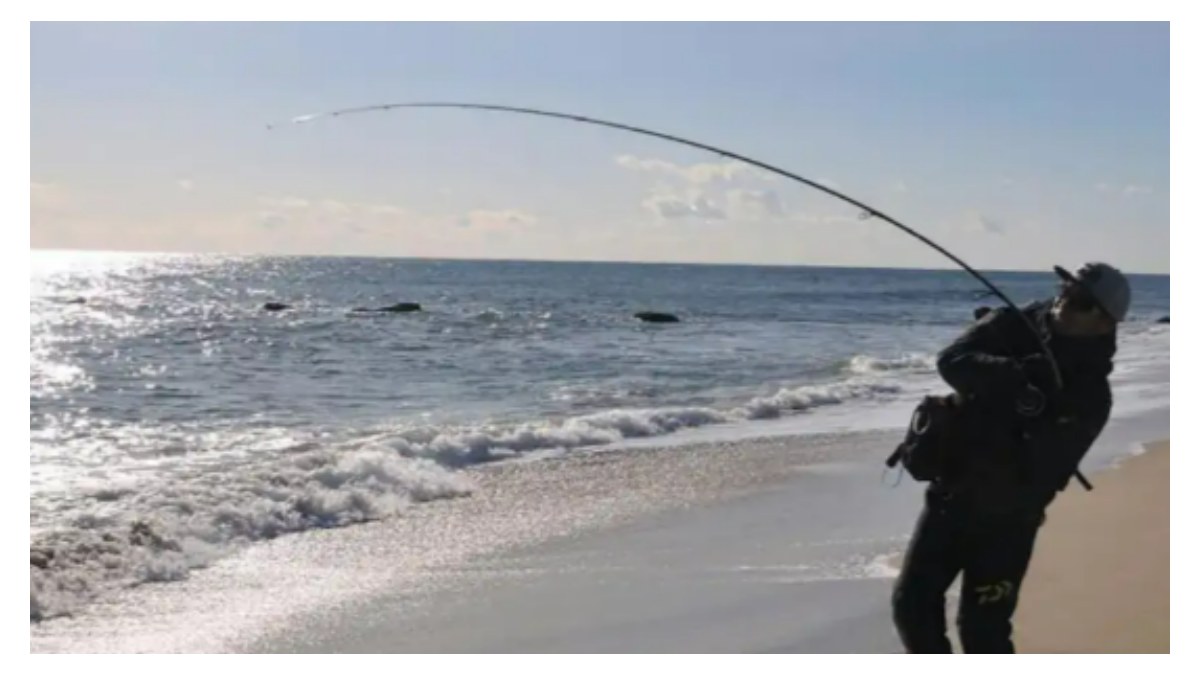
This is the nerdy but important bit. Set 2 kg pulling straight from the reel, and the fish still feels more than 2 kg when you fight with the rod raised. The reason is friction as the line passes through the guides. The more the rod bends, the more the line presses on the guides. To make the drag slip, the fish has to pull with the drag setting plus that guide friction.
| Rod position | Force on the fish | Note |
|---|---|---|
| Rod low, line straight | About the drag setting | Slips as set |
| Rod high and well bent | More than the setting | Guide friction is added |
So rather than setting right at the one-third limit, leave some margin. Measuring once with the rod held in your fighting position shows how much force your own tackle really applies.
Drag acts as a brake on the spool’s rotation. The force needed to pull line is roughly the brake torque divided by the radius of line on the spool. As line goes out and that radius shrinks, more force is needed to pull line off.
| Line radius on spool (example) | Force to slip the drag (example) |
|---|---|
| 24 mm (nearly full) | 2.0 kg |
| 21 mm (some line out) | about 2.3 kg |
| 18 mm (lots out) | about 2.7 kg |
This is a calculation example assuming constant brake torque (2.0 kg × 24 ÷ 21 ≈ 2.3 kg), not real spool sizes. On the surf you rarely lose over 100 m, but a long run by a big fish or a spool with little backing makes this matter. Fill your spool close to the lip to keep drag stable. Also, during a long fight a hot drag is said to lose force, so drag is never truly constant.
Seeing how much the number changes in step 4 makes the “raised rod adds load” point very real. A fishing scale also weighs your catch, so it is handy to own one.
One litre of water weighs about 1 kg, so a full 2 L bottle is about 2 kg (slightly more with the bottle).
A 1.5 L bottle or different water levels give 1, 1.5 and 2 kg reference points. It is not precise, but knowing whether you are above or below 2 kg is far better than guessing.
Experienced anglers often set drag by pulling line by hand, but feel drifts more than you think. Measure with a scale or bottle at least once to calibrate.
Tightening the drag in a panic after hooking a fish spikes the load and often breaks the line. If you need more pressure, add a light brake with a finger on the spool; it is easier to control and safer.
The shore break is where most fish are lost on the surf. When backwash drags a fish out, the line takes a sudden big load. Whether the drag slips then decides whether you land it. Always check the drag is not too tight before you start. See landing yellowtail on the surf.
Storing a reel with the drag tight can compress the washers and make the drag less smooth. Make loosening it after washing a habit. See how to wash a fishing reel.
Most people set drag “by feel”. Measure once with a scale and you will almost certainly find it was lighter or heavier than you thought. The surf tests drag constantly: flounder mouths, blue-water runs, backwash in the shore break. Remember three things: base one third on knot strength, raising the rod adds load, and drag gets heavier as line goes out. Before your next trip, just grab a bottle of water and measure your drag.
More basics: my drag setting guide.