Reading Water Clarity on the Surf: Why Lightly Stained Water Fishes Best, and Which Lure Colours to Use
minagiman
Minagiman's Fishing Adventures in Japan
Have you looked at the price tag on a tungsten jig or sinker lately and thought, “was it always this expensive?” It is not your imagination. Tungsten prices have surged worldwide and tackle prices keep rising. Here is what is happening, as of November 2026, and what anglers can do about it.
In short: tungsten (TG) price rises look likely to last for a while. But for surf fishing and shore jigging, lead or zinc jigs can often do the job, so there is no need to panic-buy.
Tungsten is a very heavy, hard metal used not only in fishing tackle but in cutting tools (cemented carbide), electronics and the defence industry. China is said to produce most of the supply, and since reports in February 2025 that China had begun restricting exports of tungsten and other metals, supply has tightened and prices have climbed sharply.
| When | What happened |
|---|---|
| Feb 2025 | Reports that China began export restrictions on tungsten and other metals |
| Mar 2026 | APT (an intermediate tungsten product) hit a high of US$2,400 per MTU, according to an industry report |
| Spring 2026 | Price revisions on Daiwa TG Bait and others; Japanese business press reported price rises spreading to hobbies such as darts and fishing |
| Early Oct 2026 | Chinese tungsten concentrate prices fell more than 20%, per a Chinese industry news site |
| Late Oct–Nov 2026 | Prices rose again; concentrate gained more than 7% in the week of 6 November |
In Japan, a tool maker reportedly limited orders for carbide products, so the effect goes beyond fishing tackle. One Japanese media report quoted tackle industry voices saying purchase costs had risen two to three times.
A clear example is Daiwa’s tungsten jig TG Bait Tachiuo (for ribbonfish). Comparing the 2025 catalogue with Daiwa’s 2026 website (list prices before tax):
| Weight | 2025 catalogue | 2026 (official site) | Change |
|---|---|---|---|
| 80 g | ¥2,900 | ¥3,700 | +27% |
| 100 g | ¥3,150 | ¥4,400 | +39% |
| 120 g | ¥3,500 | ¥5,200 | +48% |
The 2025 figures come from an angler’s blog post comparing catalogues; the 2026 figures were checked on Daiwa’s site. Heavier jigs rose more because they use more tungsten. The 150 g is now ¥6,000 and the 180 g ¥6,450: over ¥6,000 for a single jig.
| Product | Material | Price (14 Nov 2026) |
|---|---|---|
| Daiwa TG Bait 30 g | Tungsten | ¥2,782 |
| Daiwa Samurai Jig R 30 g | Lead | ¥688 |
| Jackall TG Bin Bin Switch 100 g | Tungsten | from ¥3,200 |
| Jackall lead Bin Bin Switch 100 g | Lead | ¥1,238 |
For a 30 g jig, TG costs about four times as much as lead; for tai rubber (sea bream jigs) the gap is about 2.6 times. Lose one TG jig on a snag and you have lost the price of four lead jigs. Prices vary by colour and change daily.
| When | Chinese tungsten concentrate price | Movement |
|---|---|---|
| Early Oct 2026 | Below 300,000 yuan/t | Down about 22% after the national holiday |
| Late Oct 2026 | About 350,000 yuan/t | Rebounded about 19% |
| Oct 2026 average | 330,300 yuan/t | −19.27% month on month, +18.73% year on year |
| 6 Nov 2026 | About 370,000 yuan/t | Up more than 7% in a week |
Figures are from market reports by a Chinese tungsten industry news site. October saw panic selling and a drop of over 20%, but buying by large players sent prices back up within weeks, and they kept rising into November. Tackle shop prices also lag raw materials by months, because makers use metal bought months to a year earlier, so even a small fall in tungsten is unlikely to bring quick price cuts.
Simply because it is much denser than lead.
| Material | Density (g/cm³) | Size at the same weight (lead = 100) |
|---|---|---|
| Tungsten | about 19.3 | about 59 |
| Lead | about 11.3 | 100 |
| Iron | about 7.9 | about 144 |
| Zinc | about 7.1 | about 159 |
A 30 g tungsten jig is about 60% the size of a lead one. Being smaller, it:
Put the other way round: if you do not need those three things, lead will do fine.
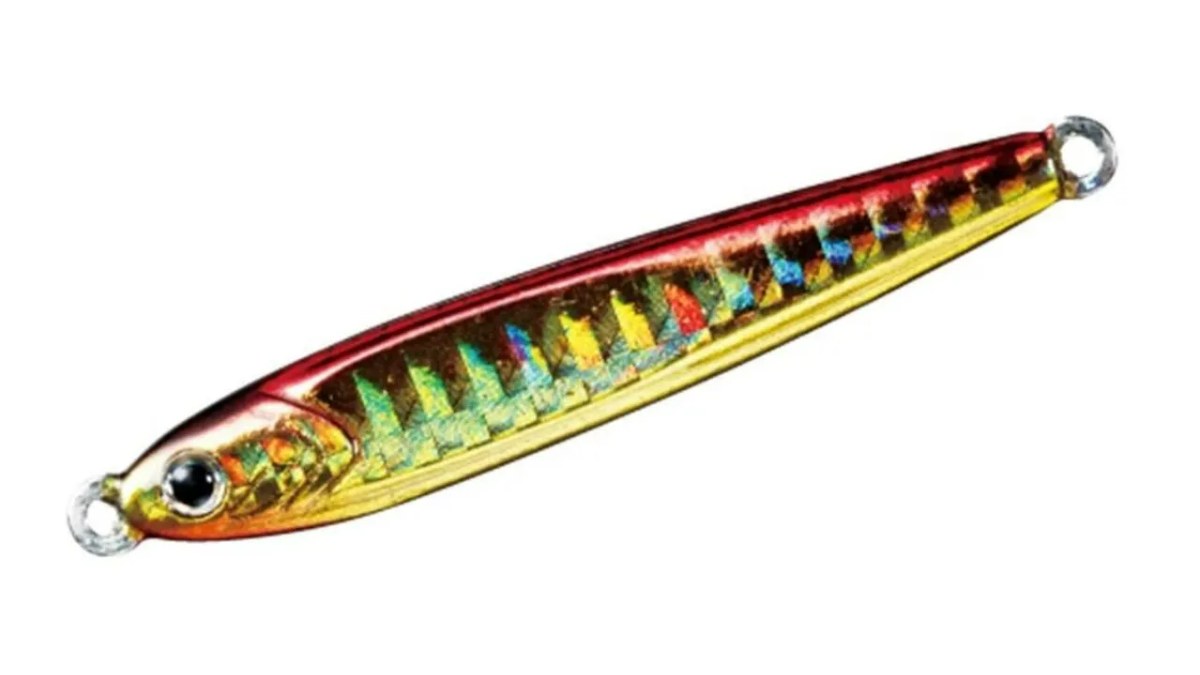
Lead metal jigs already dominate surf fishing and shore jigging in Japan. Popular jigs such as Jigpara, Samurai Jig R, Tobisugi Daniel and Metal Effect are mostly lead, so everyday fishing is not hit that hard.
| Fishing | Why TG is used | Impact |
|---|---|---|
| Ribbonfish jigging (boat) | Fast current; heavy jigs to hold bottom | Large (heavier jigs rose more) |
| SLJ and tai rubber | Small silhouette, fast sink | Large |
| Bass drop shot and Texas rigs | Small, sensitive sinkers | Large |
| Surf into a headwind, long casts | Small and casts far | Medium (lead is an easy substitute) |
| General surf jigging | Lead already standard | Small |
Headwinds are where TG shines most. But slim, long lead jigs or rear-weighted jigs close much of the gap. Bring out one TG jig only when you really cannot reach.
Low-density zinc alloy jigs are increasingly common. Zinc is lighter than lead, so at the same weight the jig is bigger and sinks slowly: the opposite of TG. That slow movement can work on pressured blue-water fish and fish looking up. See Daiwa Samurai Jig R SS.
Spanish mackerel often bite through line, so expensive jigs hurt more when lost. Lead-based blade jigs for them start from around ¥1,300 each, such as the Daiwa Saltiga Blade Jig SS.
Check your knot for damage every time, leave a slightly longer leader, and start winding as soon as the jig hits bottom on rough ground. These basics greatly reduce losses. See the PE line and leader chart.
| Situation | Advice |
|---|---|
| TG is essential for your ribbonfish jigging or SLJ | Secure just the weights and colours you use most, early |
| You use TG occasionally on the surf for headwinds | One or two is enough; use lead as your mainstay |
| You get by fine with lead | No need to buy |
| You find old-price stock on sale | Buy weights you use; skip the rest |
Avoid stockpiling weights you will never use just because prices are rising. Unused jigs are just inventory. Buy for the number you actually lose in a year.
In recent years TG jigs became so common that some anglers reached for TG by default. With this price surge, TG is likely to return to its original role as a trump card for special situations. On the surf, most fishing works with lead; TG is only really needed on strong headwind days or when bait is so small that lead silhouettes get ignored. Meanwhile, more zinc and iron jigs designed to sink slowly is an interesting trend. Higher material costs widening lure choices may not be all bad for anglers. Start by counting how many TG jigs are in your box.
Related: Japanese metal jigs guide.