Tackle House Feed Popper: Every Size From 70 mm to 175 mm Explained
minagiman
Minagiman's Fishing Adventures in Japan
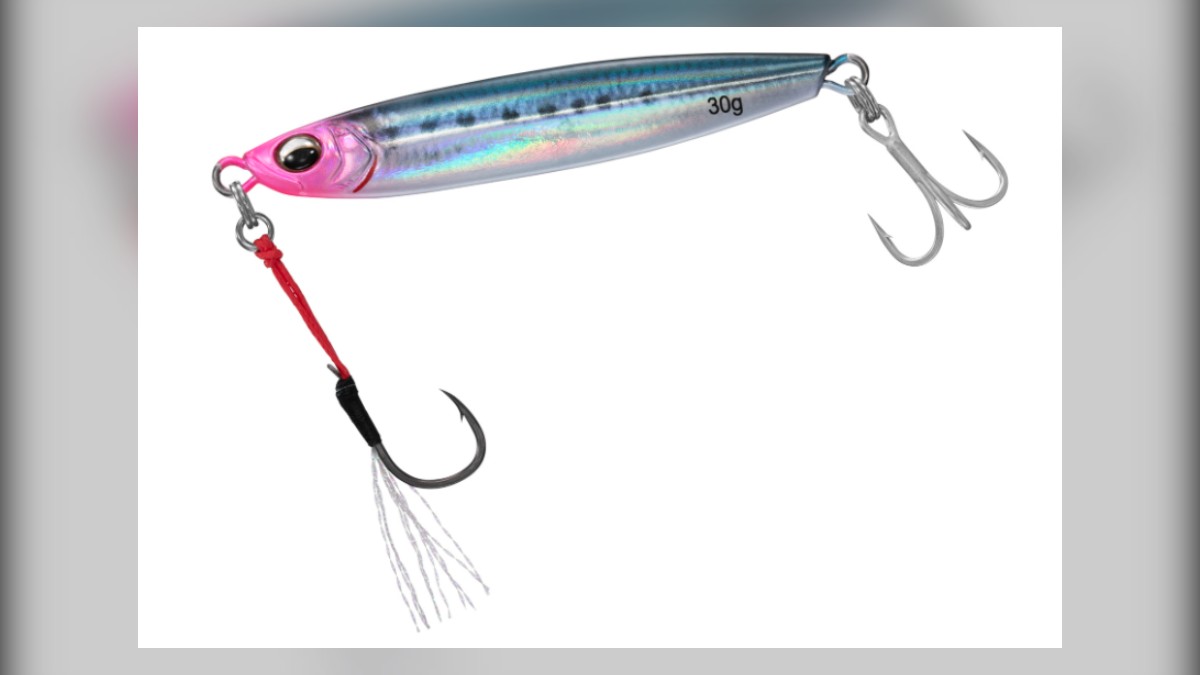
Shore jigging in Japan these days is dominated by high-speed blade jigs and high-pitch jerking. The faster you move the lure, the more you catch. But when everyone does the same thing, the pelagics get wise to it.
Daiwa’s answer is a jig built to do the opposite – to show itself slowly: the Samurai Jig R SS (Slow Swimmer). It is made not of lead but of zinc alloy. Here is where a jig that is “big for its weight” works.
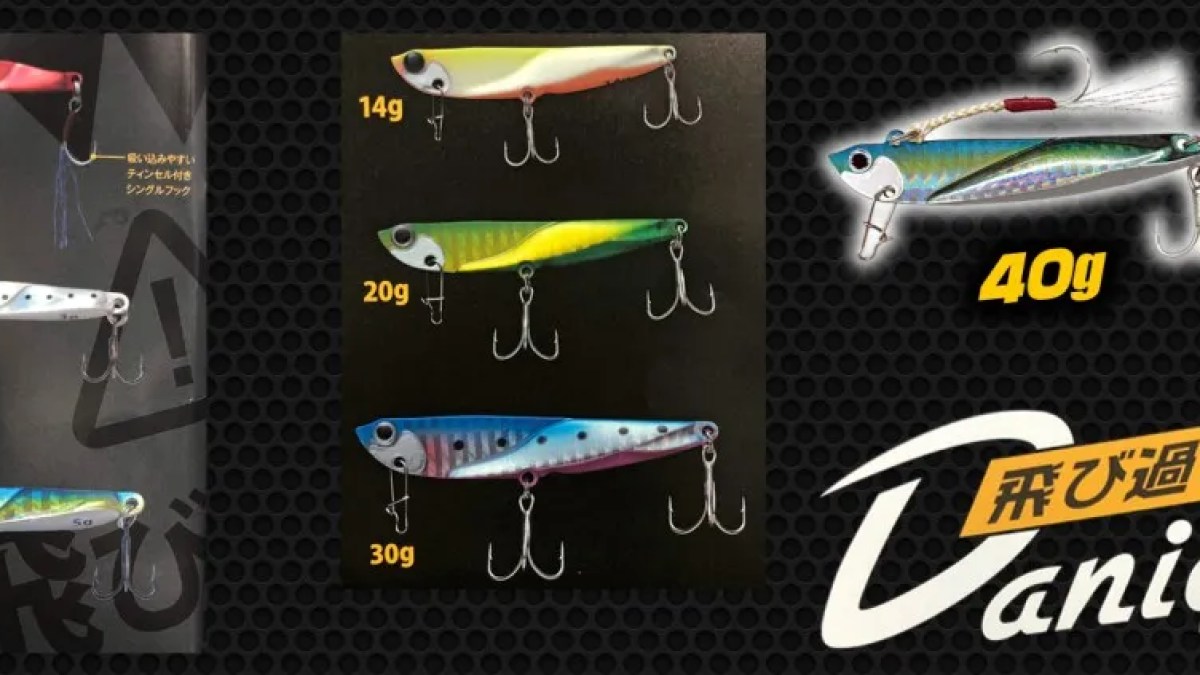
The Samurai Jig R SS is a new addition to Daiwa’s Samurai Jig R shore-jigging series. Zinc is lighter than lead for the same volume, so at the same weight the body is larger. A 30 g SS has a bigger silhouette and sinks more slowly than a 30 g lead jig.
| Weight | Length | Material | Front hook | Rear hook | List price (excl. tax) |
|---|---|---|---|---|---|
| 20 g | 81 mm | Zinc | Iseama #13 | Treble #8 | 1,000 yen |
| 30 g | 92 mm | Zinc | Iseama #14 | Treble #6 | 1,050 yen |
| 40 g | 102 mm | Zinc | Iseama #14 | Treble #4 | 1,100 yen |
Released September 2026, in 10 colours.
Look at the length. The 30 g is 92 mm and the 40 g is 102 mm. The regular lead Samurai Jig R at 40 g is 92 mm. So the 30 g SS has the same length as a 40 g standard jig, and the 40 g SS is a centimetre longer still.
Zinc is a lighter metal (lower density) than lead. At the same weight the body is bigger, catches more water, sinks slowly and moves lazily. A lead jig sinks fast and moves sharply; a zinc jig sinks slowly and drifts. Both are “metal jigs”, but what they show the fish is completely different.
Low-density jigs catch more air and usually lose distance. The SS uses a rear-weighted design to keep its casting distance – the idea is to fly far, then show itself slowly a long way out.
Autumn brings plenty of sardine and gizzard-shad-type bait around 10 cm long. 92 mm at 30 g is just the right size for that – and being able to match bigger bait on lighter tackle is a real advantage.
In the last few years, high-speed blade jigs have spread fast in shore jigging. Speed certainly switches pelagics on. But when every angler shows the same speed and the same action, I think the fish get used to it.
What works then is a different movement. A jig that drifts slowly among all the fast lures can get pressured fish to bite without suspicion. On a slow day it is tempting to go faster and further; some fish bite when you do the opposite and show the lure slowly, for longer. Crowded breakwaters, and the time just after a boil has gone down, are when a slow swimmer is worth a try.
| Material | Density | Silhouette at same weight | Sink rate | Best for |
|---|---|---|---|---|
| Tungsten | Very high | Very small | Very fast | Deep water, strong current, tiny bait |
| Lead | High | Standard | Fast | Most shore jigging |
| Zinc (SS) | Low | Large | Slow | Pressured fish, surface to mid-water, bigger bait |
Tungsten is “small, fast, deep”; zinc is the opposite, “big, slow, shallow”. Put lead in the middle and carry tungsten and zinc either side, and you can choose silhouette and sink rate freely. Zinc is also much cheaper than tungsten – the 30 g SS is 1,050 yen – so you can throw it without worrying about losing it. (More in my metal jig guide.)
In deep rocky areas or fast currents, it takes too long to reach the bottom – lead or tungsten jigs suit those places better.
| Samurai Jig R SS | Samurai Jig R SB | |
|---|---|---|
| Material | Zinc alloy (low density) | Lead |
| Length at 30 g | 92 mm | 64 mm |
| Sink | Slow | Fast |
| Silhouette | Large | Small (short body) |
| Best for | Pressured pelagics, slow presentations, bigger bait | Pelagics fixated on small bait, deeper layers |
| Price (30 g, excl. tax) | 1,050 yen | 750 yen |
The same 30 g, but 92 mm vs 64 mm – nearly 3 cm different. They are opposites within the same series. I use the SB on days with small bait such as whitebait and anchovy, and the SS when the bait is bigger sardine or shad and the fish are pressured.
The base of the series – a flat body that works on jerks and straight retrieves alike. The standard model is the first one to buy; the SS is the “next move” when the standard stops working. (See my Samurai Jig R review.)
For Spanish mackerel and pelagics on a high-speed retrieve, the bladed Samurai Jig R Spin is the opposite of the SS. My approach: search widely with the Spin at speed at dawn, then switch to the SS and slow down when the response fades. Changing speed – fast, then slow – can draw a second reaction from the same spot.
Let it reach the bottom, then wind slowly and steadily. Being low-density, it does not scrape the bottom even at slow speed, and it drifts as it swims.
Lift the rod in big, slow sweeps and let the fall do the work. A zinc jig sinks slowly, so the fall lasts longer – more time for a following fish to take it.
The slow sink makes it easy to keep in the upper layers. When a boil appears, cast a little ahead of the school and wind slowly through it.
| Situation | Weight |
|---|---|
| Harbours, low breakwaters, on a seabass rod | 20 g |
| Typical breakwaters and beaches | 30 g |
| Long casts needed, windy days | 40 g |
Ten colours: UV Double Pink Candy, Akakin Glow Berry, UV Real Bullpin Iwashi, Pink Iwashi, Bullpin, Maiwashi, Zebra Glow, Shirasu, Glikin Zebra and UV Pink Zebra. Because this jig is meant to be looked at closely, I build around naturals such as Maiwashi and Shirasu, adding UV Real Bullpin Iwashi or Akakin Glow Berry for dawn and stained water.
| Item | Guide |
|---|---|
| Rod | Light shore jigging rod around 9-10 ft; a seabass rod for the 20 g |
| Reel | 3000-4000 size |
| PE | 0.8-1.2 |
| Leader | Fluorocarbon 20-30 lb |
A low-density jig has more retrieve resistance than a lead jig of the same weight, so you feel its action more. A slightly softer rod brings out the lazy movement better.
In fishing, it is often the angler doing something different who catches. When everyone is winding fast, show it slowly – that alone can change things. Put one “slow” jig in the box this autumn.