Daiwa Overdrive 107S: The 40 g Size Between the 95S and 120S, and How to Choose
minagiman
Minagiman's Fishing Adventures in Japan
Autumn into early winter, lunker seabass come close to shore chasing gizzard shad and spawning sweetfish – the best chance all year to meet a really big one.
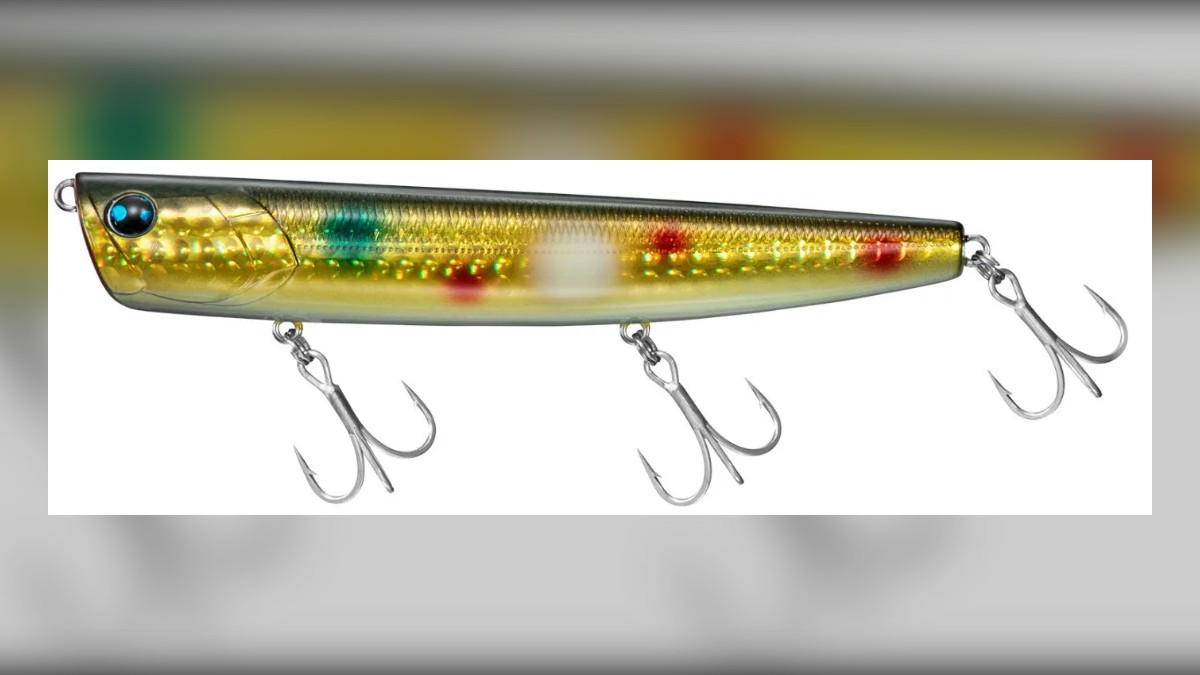
Right on time, Daiwa’s topwater Morethan Burst Upper has gained a surprising 180 mm, 60.5 g model. It ignores medium seabass and targets only lunkers over 80 cm – a very focused lure. Here is when I would throw it.
The Burst Upper is the topwater in Daiwa’s Morethan seabass brand, known for producing a “fish-catching wake” with nothing more than a cast and retrieve. It has grown through 80F, 110F and 140F; the 180F is the largest, supervised by Masaya Konuma and aimed at seabass over 80 cm.
| Model | Length | Weight | Depth | Max distance | Hook | List price (excl. tax) |
|---|---|---|---|---|---|---|
| 80F | 80 mm | 10.4 g | Surface | 50.0 m | #6 | 1,850 yen |
| 110F | 110 mm | 19.2 g | Surface to just under | 56.5 m | #6 | 2,100 yen |
| 140F | 140 mm | 30.5 g | Surface to just under | 57.0 m | #3 | 2,300 yen |
| 180F | 180 mm | 60.5 g | Surface to just under | 63.0 m | #2 | 3,500 yen |
All floating. The 180F was released in September 2026, the 110F in April 2026. The 180F is about twice the weight of the 140F – treat it as a different lure altogether.
At 180 mm, medium seabass struggle to eat it and only big ones take it. The size matches lunkers feeding on big bait: juvenile mullet, gizzard shad, spawning sweetfish and halfbeak. According to Masaya Konuma, big fish can be suspicious of smaller lures and reluctant to bite; the 180F is designed not to put them off.
It does not over-swim: a straight, “I-shaped” action with the roll held back. Without flashy movement, pressured big fish are less likely to see through it.
The tail is thicker than on the other sizes. Even just floating, the eddy behind the tail makes it wobble naturally – it looks like weakened bait without being wound.
Every 180F colour has a glass rattle. It clicks when you start winding, and when you start again after a pause, alerting seabass below the surface.
A shallow cup at the lower centre of the flat water-catching face throws sound and bubbles along with splash. Every size has a moving-weight system, so even the big 60.5 g body flies level and stable.
Matching the bait is the rule in seabass fishing. But for autumn lunkers, selecting the size of fish matters too. Throw a 140 mm or 125 mm lure and 60 cm seabass often get there first. That is fun – but on a night when you only want a lunker, a lure too big for small fish to eat first is a weapon.
Lunker hunting is also about enduring the hours without bites. Few fish, but anything that comes is over 80 cm. The 180F is for anglers who can commit to that and keep throwing a big lure.
| 180F | 140F | |
|---|---|---|
| Weight | 60.5 g | 30.5 g |
| Max distance | 63.0 m | 57.0 m |
| Hook | #2 | #3 |
| Tail | Extra-thick | Standard |
| Target | Lunkers over 80 cm | Medium to large seabass, pelagics |
| Tackle | Strong big-bait rod | Standard seabass rod |
The 140F, at 30.5 g, casts on a normal seabass rod – a big advantage. For all sizes of seabass, the 140F; for lunkers only, the 180F. I would start with the 140F, and switch to the 180F when the bait is big and big fish are clearly looking up.
Also from Morethan, an elastomer wake bait: 150 mm, 33 g, with a bellows tail that pulses even when stopped.
| Burst Upper 180F | Soft Wake 150F | |
|---|---|---|
| Material | Hard plastic | Soft elastomer |
| Size / weight | 180 mm / 60.5 g | 150 mm / 33 g |
| Depth | Surface to just under | To 0.6 m |
| Appeal | Wake, splash, rattle | Bellows-tail pulse, soft look |
| Best for | Lunkers chasing big bait on top | Low-activity seabass looking just under the surface |
The Burst Upper makes fish break the surface; the Soft Wake gets them to eat just under it. On days fish will not commit to the top, use the Soft Wake; when they are hitting the surface, the Burst Upper.
Also a surface lure, but the Dog MAX SW is a pencil you swing side to side with the rod – 130 mm, 33 g, and good for pelagics too. The Burst Upper is “just wind”; the Dog MAX SW is “work it with the rod”. For drifting in rivers and night fishing, the Burst Upper; for searching the surface widely by day on beaches and harbours, pelagics included, the Dog MAX SW.
The basic method: wind slowly, raising a wake as it comes. At night, slow is everything.
Let the river or tidal flow carry it without winding. Thanks to the thick tail, it wobbles even while drifting – a weakened baitfish.
Wind, stop, wind again. The rattle clicks as you start winding, so restarting after a pause is the prime bite moment.
In fast shallow runs, winding quickly against the current is said to work: the wake stays modest and the action stable.
| Situation | Method |
|---|---|
| Light-and-shadow lines in rivers and estuaries (night) | Dead slow, drift |
| Runs during the spawning-sweetfish pattern | Up-current fast retrieve |
| Around schools of gizzard shad or juvenile mullet | Stop-and-go |
Eight colours, all with rattles.
| Colour | When |
|---|---|
| Rattle-in Ochi-ayu (female) | The go-to for the spawning-sweetfish pattern |
| Rattle-in Lunker Killer Gold | Stained water, night, maximum appeal |
| Rattle-in Lime Pearl Sand | Night, silhouette |
| Rattle-in Konuma Special / Ver. Kirameki | The supervisor’s own colours |
| Rattle-in Matt Lime Chart | Stained water, low light |
For the sweetfish pattern, Ochi-ayu without hesitation. For the gizzard shad pattern or river mouths at night, Lime Pearl Sand or Matt Lime Chart for a clear silhouette.
| Item | Guide |
|---|---|
| Rod | A seabass rod (MH-H) or big-bait rod that casts around 60 g |
| Reel | Around 4000 size, or a baitcaster |
| PE | 1.5-2 |
| Leader | Fluorocarbon 30-40 lb |
60.5 g exceeds the lure rating of most seabass rods. Always check your rod’s upper limit. With lunker fights in mind, go heavier on line and leader too. (See how to set your drag.)
The 180F is not a lure for everyone. But for anglers serious about lunkers, there will be moments when it feels like the only lure to throw. In gizzard shad and sweetfish season, raise a big wake at a river mouth at night.