Seisho Surf Fishing Guide (Kanagawa): Steep Gravel Beaches You Can Reach by Train
minagiman
Minagiman's Fishing Adventures in Japan
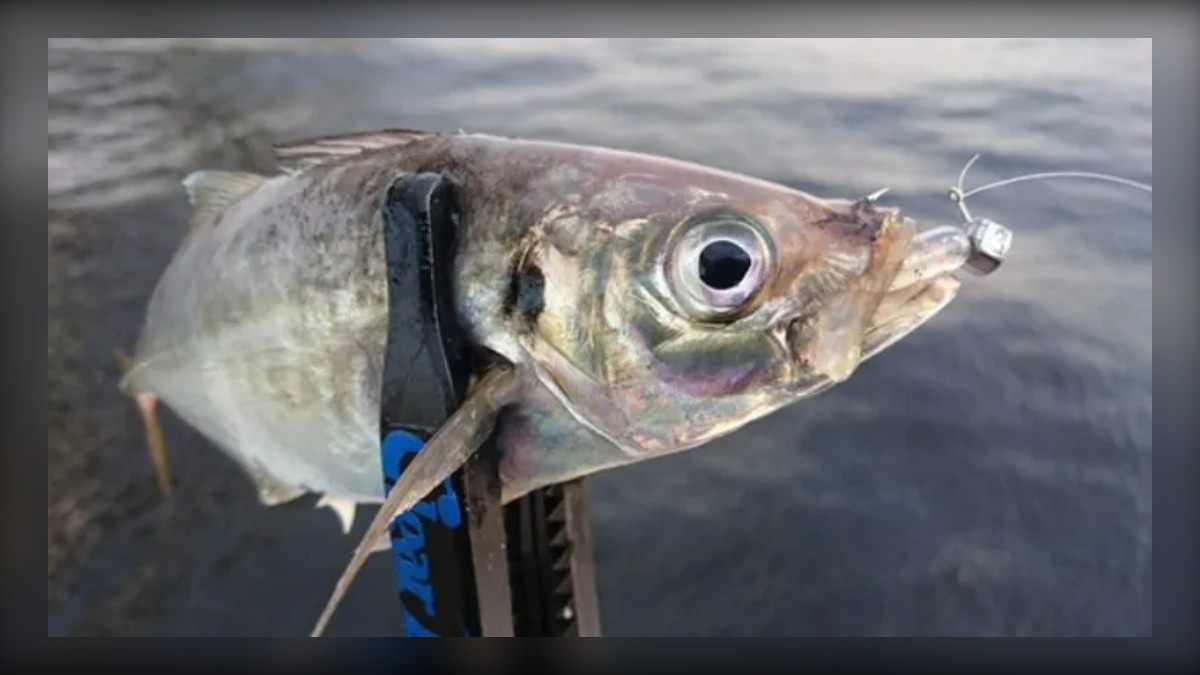
After a while in ajing (light-lure fishing for aji, Japanese horse mackerel) you hit a wall: good days are good, but on tough days you catch nothing. The difference comes from how you build your approach around depth, current and the fall. Here is how to get that extra fish — and the bigger ones — on winter jighead rigs.
This guide assumes you know the basics: tackle, jighead weights and how to fish pier lights. If not, read the beginner’s guide first.
Beginners pick jigheads by weight — heavier for wind, heavier for depth. Anglers who catch more think about how fast they want the rig to sink. The same 1 g sinks at different speeds depending on worm size and shape, line diameter and current. Your job is to find the sink rate the aji want that night.
| Slower sink | Faster sink |
|---|---|
| Lighter jighead | Heavier jighead |
| Fatter or longer worm (more drag) | Slimmer or shorter worm |
| Let it sink without tension | Tungsten — small but heavy heads |
| Cast up-current and let it ride | Cast down-current so it works against the flow |
Building references like “1 g takes 15 counts to bottom under this harbour light” makes you much faster at new spots.
Winter aji often hold tightly in one layer — no bites up top, but steady bites near the bottom.
| Step | What to do |
|---|---|
| 1 | Count to bottom to learn the depth |
| 2 | Work down from the surface in 3-count steps to find the biting layer |
| 3 | Focus around the count that produced bites |
| 4 | When bites stop, recheck the layers above and below — the school may have moved |
Keep your retrieve speed and rod angle identical every time; change either and the rig runs at a different depth even with the same count.
On tough days, drifting with the current works best. Aji usually face into the flow waiting for food, so a worm that drifts naturally with it gets eaten.
Light jigheads and low-stretch line make the current easier to feel — one reason advanced anglers like ester or ultra-thin PE.
| Fall | How | When |
|---|---|---|
| Free fall | Slack line, sinks straight down | Active fish, getting to bottom fast; watch the line for bites |
| Tension fall | Line kept tight, rig swings toward you in an arc | Bites transmit to your hand; the most-used fall |
| Curve fall (with current) | Let the current carry the rig sideways as it sinks | Tough days, pressured schools; combine with drift |
Under winter pier lights, the tension fall after each action is the core technique.
| Action | How | When |
|---|---|---|
| Lift and fall | Lift the rod lightly, then tension fall | When unsure — the winter default |
| Double twitch | Two small lifts to hop the worm, then fall | Scattered fish, need to get noticed |
| Stay | Pause a few seconds mid-fall or on the bottom | Cold water, sluggish fish |
| Slow retrieve | Constant, slow wind | Fish holding high in the water |
Think of the action as “showing” and the fall as “feeding”. In winter, give the fall more time and bites usually increase.
| Bite | Feel | Response |
|---|---|---|
| Tick | A small knock | Set immediately with a small wrist flick |
| Release | Tension suddenly drops | Aji ate upward — set right away |
| Heaviness | Gradual weight | Fish holding the bait — lift slowly to feel, then set |
| Line movement | Line runs sideways or stops | Bite on a free fall — take up slack and set |
Keep hooksets small — just the wrist. Aji have soft mouths and big sweeps tear hooks out.
On tough days, go small hook plus tungsten head; when hunting big aji, use a larger heavy-wire hook to make sure you land them.
| Change | Try |
|---|---|
| Worm | Smaller size, different shape (pintail → straight) |
| Colour | Clear ↔ glow, glitter ↔ no glitter |
| Jighead | Change by 0.2–0.3 g, or change shape |
| Depth | Recheck above and below in 3-count steps |
| Fall | Tension → free, longer pauses |
| Position | Other side of the light, or move up-current |
| Line | Thinner, to reduce drag and current effect |
Change one thing at a time — then you know what made the difference.
| Part | Advanced guide |
|---|---|
| Rod | 5’6”–6’ range; solid tip for hooking, tubular for current and bottom information |
| Reel | Light 1000–2000 with a smooth drag |
| Line | Ester 0.2–0.3 or PE 0.1–0.3 |
| Leader | Fluorocarbon 0.6–1 |
Ajing is an information game: finding where the aji are and what they respond to before anyone else. Jighead weight, counts, fall and position are all tools for collecting that information. On slow days, write down the count and conditions of every bite. A fish you can explain is the fastest route to the next level.