How to Read Depth and Structure With the Countdown: Sink Rate, PE Line Colours and Finding the Break
minagiman
Minagiman's Fishing Adventures in Japan

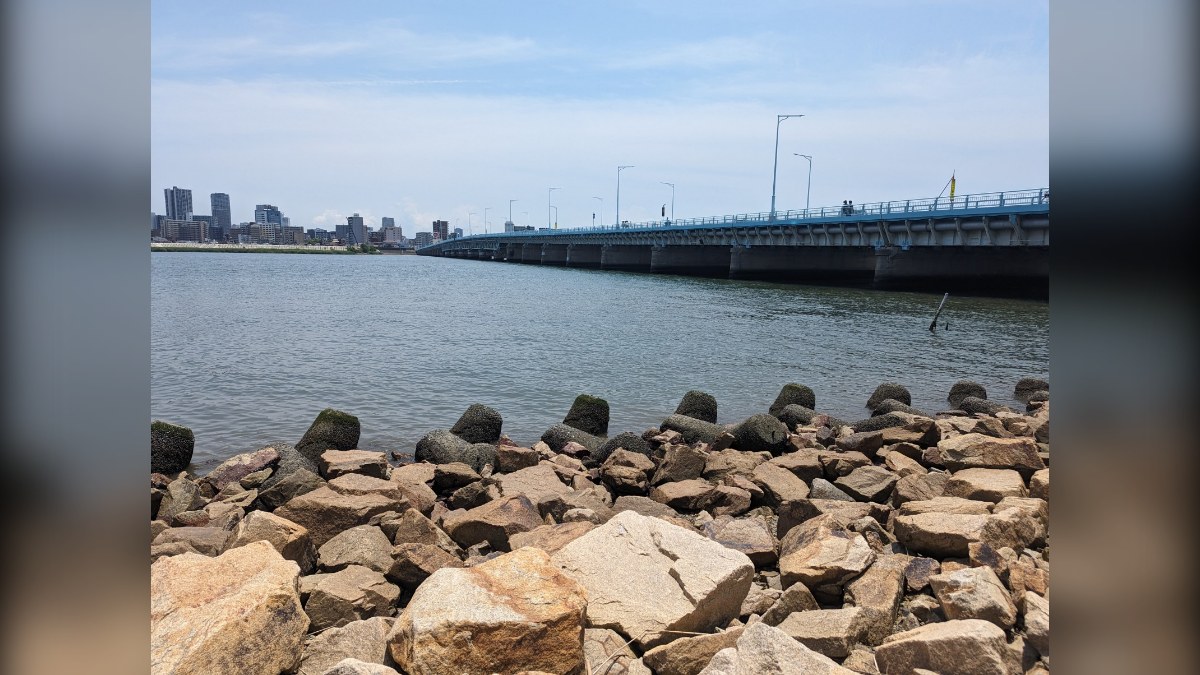
Walk along almost any Japanese harbour and you will see breakwaters lined with huge concrete blocks called tetrapods. To most visitors they are just sea defences. To Japanese anglers they are a fishing spot, because the dark gaps between the blocks are full of rockfish. Dropping a bait straight down into those gaps is called ana-zuri, which literally means “hole fishing”.
I am Minagiman, a Japanese angler who fished the Enshu-nada surf in Shizuoka for many years and now lives on the Gold Coast in Australia. I have written about hole-fishing rods on my Japanese blog, and in this English guide I explain how ana-zuri works, the simple rig it uses, what you can catch, and, most importantly, how to stay safe, because tetrapods are one of the most dangerous places to fish in Japan.
Rockfish live in holes. They sit in the shade between rocks and blocks and wait for food to fall past them. Ana-zuri takes advantage of that: instead of casting out, you drop a bait vertically into a gap, let it hit the bottom of the hole, and give it a few small lifts. If a rockfish is home, it usually bites quickly. If nothing happens after a short time, you move to the next hole.
That is what makes ana-zuri so much fun. It is fast, active fishing, and because every hole is different, you never know what you will pull out. You might catch a kasago in one gap and a completely different fish in the gap next to it. It is also a method that works in winter, when many other shore targets go quiet; see my guide to winter fish in Japan for other cold-season options.
The standard ana-zuri rig is the burakuri. It is very simple: a sinker with a short piece of line and a hook directly underneath. The bait dangles just below the weight, like something hanging in front of the fish’s nose. When the rig drops into a hole, the bait falls right in front of a rockfish waiting there.
| Part | What it is |
|---|---|
| — | — |
| Sinker | A small, often brightly painted weight that takes the bait into the hole |
| Short leader | A few centimetres of line between the sinker and the hook |
| Hook | A single hook for the bait, sized for small to medium rockfish |
| Snap or loop | Connects the burakuri to your main line |
Burakuri are cheap and sold at almost every tackle shop near the coast in Japan, and they are also easy to make yourself. Weights are given in Japanese go sizes (1 go is 3.75 g). Use the lightest weight that still gets the bait down into the gap quickly; heavier weights are easier to control in wind and current but snag more often.
Ana-zuri is famous for being forgiving with bait. Common choices in Japan are:
Japanese anglers even catch rockfish on things like fish sausage or salted squid, which shows how aggressive the fish are when the bait falls in front of them. That makes ana-zuri a great choice for children and beginners.
| Item | Typical choice | Why |
|---|---|---|
| — | — | — |
| Rod | Short rod, roughly 0.5 to 1.5 m | Easier to aim into a gap right below your feet |
| Reel | Small baitcasting or spinning reel | A baitcaster lets you drop instantly with a thumb |
| Line | Nylon or fluorocarbon, or PE with a leader | Abrasion resistance matters around concrete |
| Rig | Burakuri | Simple and snag-resistant |
| Bait | Worms, krill, soft plastics | Whatever is easy to get |
| Extras | Fish grip, pliers, small bucket, towel | Rockfish spines are sharp |
Japanese makers sell dedicated hole-fishing rods that are much shorter than normal shore rods. Jackall’s EGG ARM, for example, came out in 2021 in 120 cm and 55 cm lengths. The longer version helps when you are aiming at gaps a little away from you, and the short one is for holes right under your feet. Daiwa also makes dedicated hole-fishing rods in 1.11 m, 1.31 m and 1.51 m lengths, with a tip that can be stored inside the handle so it is not broken while you carry it. There are even short rod-and-reel combos around 60 to 70 cm long for beginners.
If you do not want a dedicated rod, any short, light rod will work, and a compact multi-piece travel rod is a good option for visitors.
Both spinning and baitcasting reels work. If you think you will do a lot of ana-zuri, though, a small baitcasting reel is much quicker: you do not need to open a bail arm every time; you just lift your thumb and the rig drops straight into the hole.
If you snag, do not pull hard straight away. Loosen the line, move to a different angle, and lift gently. A burakuri often comes free this way. If it is truly stuck, pull on the line with a cloth wrapped around your hand rather than bending the rod.
| Fish | Romanised name | Notes |
|---|---|---|
| — | — | — |
| Marbled rockfish | kasago (gashira in Kansai) | The main ana-zuri target, found almost all over Japan |
| Japanese rockfish | mebaru | Often in the same areas, especially around rocks |
| Fat greenling | ainame | A classic hole-fishing fish in colder northern areas |
| Others | various | Small groupers, filefish and other surprises in some regions |
Kasago are excellent to eat, often served deep-fried or in miso soup in Japan. Be careful when handling them: rockfish have sharp spines on their fins and gill covers. Use a fish grip and pliers rather than your hands. If you enjoy pier fishing for small, tasty fish, my guide to kawahagi (filefish) pier fishing is another good one to read.
I always say this first when talking about ana-zuri. Wet tetrapods are extremely slippery, and the gaps between them are deep. If you slip and fall into a gap, you may not be able to climb out on your own, and waves can make it even worse. Every year there are serious accidents on breakwaters in Japan.
My guide to Japanese fishing etiquette at piers and beaches covers these signs and other local rules. If you are visiting, fishing parks and harbours with safe rock edges are a good way to try ana-zuri without climbing on big blocks; see my guide to fishing in Osaka and Kansai for examples.
Yes. The rig is simple, the bait can be almost anything, and rockfish bite quickly. Just choose a safe spot, because the tackle is easy but the footing is not.
Rockfish can be caught all year, and ana-zuri is popular in winter when other shore fishing slows down. Daytime is safer on rocks and blocks.
The bottom of a hole is full of rocks and gaps. Keep the bait just off the bottom, use the lightest burakuri that reaches the bottom, and lift a fish quickly before it swims back into cover.
Yes. Soft plastic worms on a burakuri or a small jighead work well, and they are cleaner than worms.
Ana-zuri is one of the simplest and most entertaining ways to fish in Japan: a short rod, a burakuri, a piece of bait, and a gap between the rocks. Drop it straight down, give it a few lifts, strike quickly, and move to the next hole if nothing happens. Above all, treat tetrapods with respect: go with friends, wear non-slip shoes and a life jacket, and only fish where it is allowed.